Contact Us
Midlothian has transformed over the past two decades from a small industrial and agricultural community into one of the most active residential growth corridors in the entire DFW metroplex. The city’s population has more than tripled since 2000, driven by families seeking larger lots, newer construction, and a quality of life that felt increasingly out of reach in the inner suburbs closer to Dallas. That growth has produced a residential landscape that is predominantly new, with subdivisions built throughout the 2000s, 2010s, and into the present decade sitting on open prairie land that was farmland a generation ago. But Midlothian is not exclusively new. The city’s older core carries homes and agricultural properties from the mid-twentieth century, and the gap between a 1960s farmhouse on the original Midlothian townsite and a 2018 production home in a newer subdivision represents a wider mechanical and infrastructure span than most Ellis County communities contain. Serving both populations accurately requires a company with genuine range.
Ellis AC & Furnace Repair has served the greater DFW area since 1975, and our reach extends south into Ellis County communities including Midlothian. We are family owned, our technicians are experienced across the full range of residential heating equipment, and we approach every service call the same way: find what is actually wrong, explain it clearly, and fix it right the first time.
our services
- AC & Furnace Air Filter Replacement
- AC Capacitor Replacement
- AC Coil Cleaning
- AC Compressor Repair
- AC Installation & Replacement
- AC Maintenance
- AC Repair
- AC Tune Up
- Dehumidifier Installation & Repair
- Ductless Mini Split Repair
- Emergency HVAC Repair
- Freon Recharge
- Furnace Installation & Replacement
- Furnace Maintenance
- Furnace Repair
- Heat Pump Installation & Replacement
- Heat Pump Maintenance
- Heat Pump Repair
- HVAC Ductwork Repair
- HVAC Inspection
- HVAC Maintenance
- HVAC Repair
- Indoor Air Quality Solutions
- Whole Home Air Purifier Installation
Why Homeowners in Midlothian, TX Trust Us
Signs Your Midlothian Furnace Needs Professional Attention
Midlothian sits on open Ellis County terrain with minimal topographic buffering from the cold fronts that push south and southeast across North Texas from the northwest. The city’s newer subdivisions, many of them built on recently cleared land with minimal windbreak vegetation, are particularly exposed to the wind-chill effect that open prairie produces during hard freeze events. A furnace in that environment that is carrying a developing problem into the heating season will find its limits quickly when temperatures drop and stay there. These are the signs worth acting on before that moment arrives.
- The furnace runs through full heating cycles but the home consistently falls short of the thermostat setting by several degrees, holding there regardless of how long the system operates.
- The system short-cycles, starting briefly and shutting off before completing a full heating sequence, then restarting a short time later in a pattern that repeats without satisfying the thermostat call.
- A sound that was not present last heating season has appeared during operation, whether a sharp bang at burner ignition, a rattling from the blower housing, or a grinding that builds gradually as the system reaches full output.
- Certain rooms in the home, particularly those along exterior walls facing northwest or those on upper floors in two-story configurations, stay noticeably colder than interior spaces during cold stretches.
- Airflow from supply registers feels weaker than it did in prior seasons, or distribution across the home is uneven in a way that is new this year.
- Your heating costs this winter are running higher than the same period last year without any obvious change in usage, occupancy, or thermostat programming.
- The furnace does not respond when the thermostat calls for heat, or the ignition sequence runs through multiple attempts without establishing a flame that holds through the startup cycle.
In Midlothian, where newer homes on open terrain can lose heat faster than homeowners expect during a sustained cold event, catching a developing furnace problem before the season peaks is both practical and financially worthwhile.
Why New Construction in Midlothian Is Not Immune to Furnace Problems
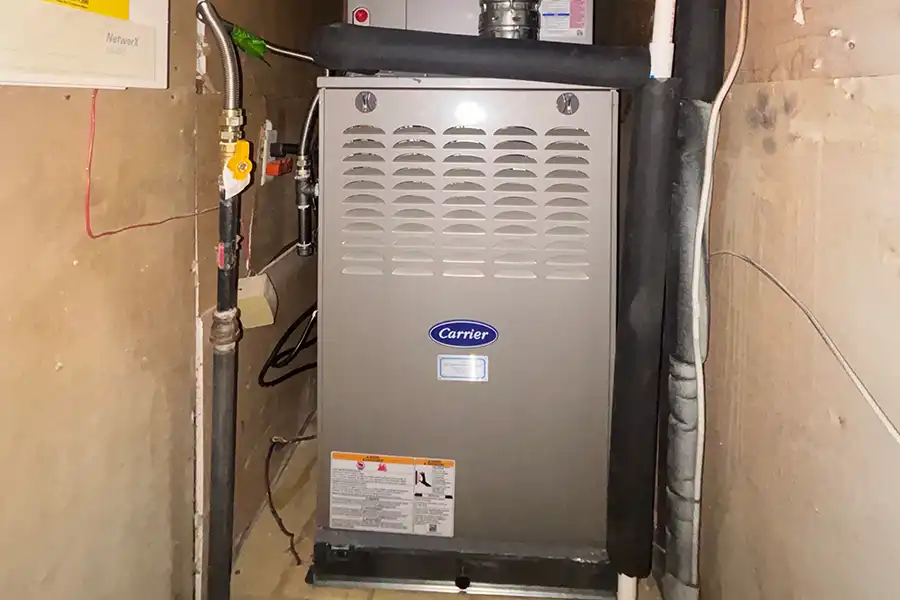
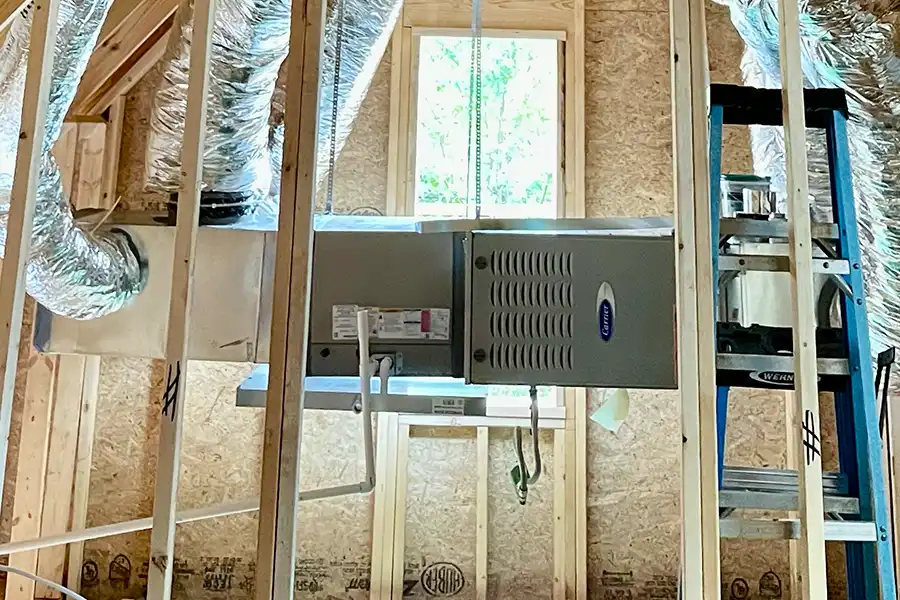
One of the most common assumptions among homeowners in Midlothian’s newer subdivisions is that a house built within the last 10 to 15 years should not have furnace problems yet. That assumption is understandable, but it does not hold up against what our technicians actually find in those homes. Midlothian sits on Ellis County’s Blackland Prairie clay formation, and the soil beneath the city’s newer subdivisions is every bit as expansive and moisture-active as the clay that has been stressing foundations and ductwork in older DFW communities for decades. The difference is that in a new subdivision, that stress begins the day construction is completed and accelerates through the first several years as the disturbed soil around the foundation goes through its initial settlement cycles. New homes also tend to have attic-mounted air handlers with flex duct systems that were installed quickly during construction and may not have been balanced or tested under real operating conditions before the homeowner moved in. These are the failure patterns our technicians encounter most consistently in Midlothian’s newer residential stock.
- Flex duct connection failures at trunk-to-branch transitions in attic installations where the duct system was installed during a rapid construction cycle and initial connection quality was not consistently verified before the home was closed up.
- Zone damper and bypass damper wear in two-story homes built with zoned HVAC configurations, where the control components installed during construction are now entering the age range where first-generation failures begin to appear.
- Condensate drain blockages in high-efficiency systems exposed to Midlothian’s elevated soil dust and organic particulate during the vegetation establishment phase that follows new subdivision development, which accelerates drain line contamination faster than in mature landscaped neighborhoods.
- Foundation settlement-related duct stress in homes on recently disturbed clay soil, where initial post-construction settlement cycles can produce more pronounced foundation movement in the first five to ten years than the soil will generate in any comparable subsequent period.
- Thermostat and control wiring issues in homes where smart home integration was installed during construction by parties other than the HVAC contractor, sometimes producing wiring configurations that do not fully match the equipment’s control requirements.
- Attic air handler and duct system performance problems in homes where open prairie wind exposure drives higher infiltration rates than the HVAC system was sized to offset, producing comfort complaints that new homeowners attribute to equipment failure when the actual issue is building envelope performance.
New construction in an active clay soil environment with open prairie exposure creates HVAC conditions that differ meaningfully from what most homeowners expect when they move into a brand-new home, and understanding those conditions is part of what allows our technicians to diagnose accurately in Midlothian’s newer neighborhoods.
What an Ellis Furnace Repair Visit Covers in Midlothian
Whether we are servicing a newer production home in one of Midlothian’s growing subdivisions or an older property near the city’s original core, every furnace repair visit from Ellis AC & Furnace Repair follows the same standard: a complete system inspection before any recommendation is made, a written estimate before any work begins, and a clear explanation of every finding in plain language. The inspection scope adapts to the equipment type and the home’s construction era, but the standard of thoroughness does not.
For standard systems, our inspection covers the heat exchanger, burner and ignition assembly, flame sensor, blower motor and capacitor, filter and return air pathway, flue and combustion venting, thermostat and control board, and accessible ductwork at the unit and nearby transitions. For high-efficiency systems, we add condensate drain and pressure switch evaluation. For zoned configurations, we test zone board communication, damper actuator function across all zones, and bypass damper condition and operation. We measure static pressure and temperature rise under operating load before finalizing any findings. Our trucks carry parts for the most common repairs across all furnace types and configurations, and the majority of Midlothian service calls are completed on the first visit.
A Winter Call in Mockingbird Hills
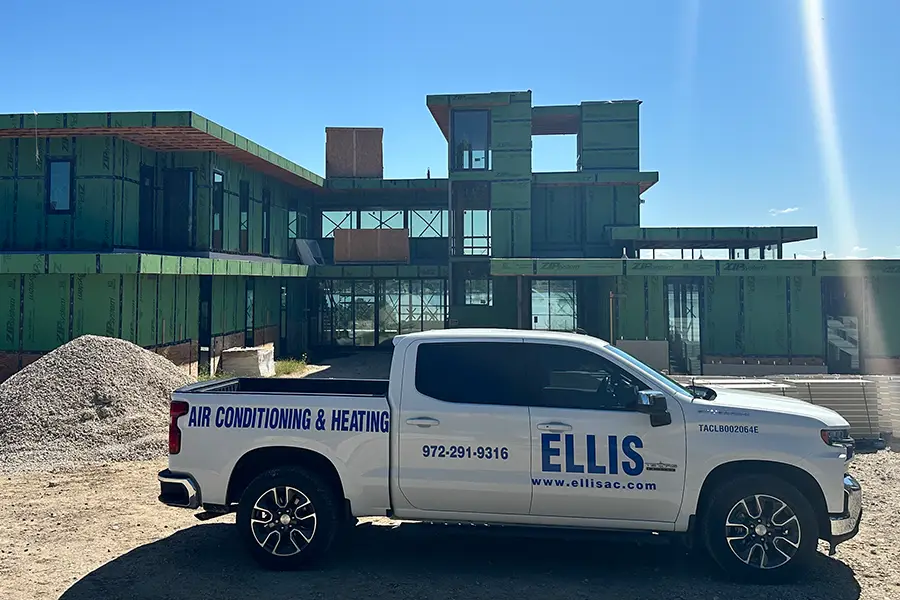
Mockingbird Hills is one of Midlothian’s established newer subdivisions, developed in the mid-2000s on open terrain southwest of the city’s historic core. The homes there were built during the first wave of Midlothian’s rapid suburban expansion, and many of them are now approaching 15 to 20 years old, placing their original HVAC systems in the range where first-generation component failures become increasingly common. On a cold Saturday morning in January, a homeowner named Teresa called after noticing that her two-story home had been running 9 degrees colder upstairs than downstairs for nearly a week despite both zone thermostats appearing to call for heat normally.
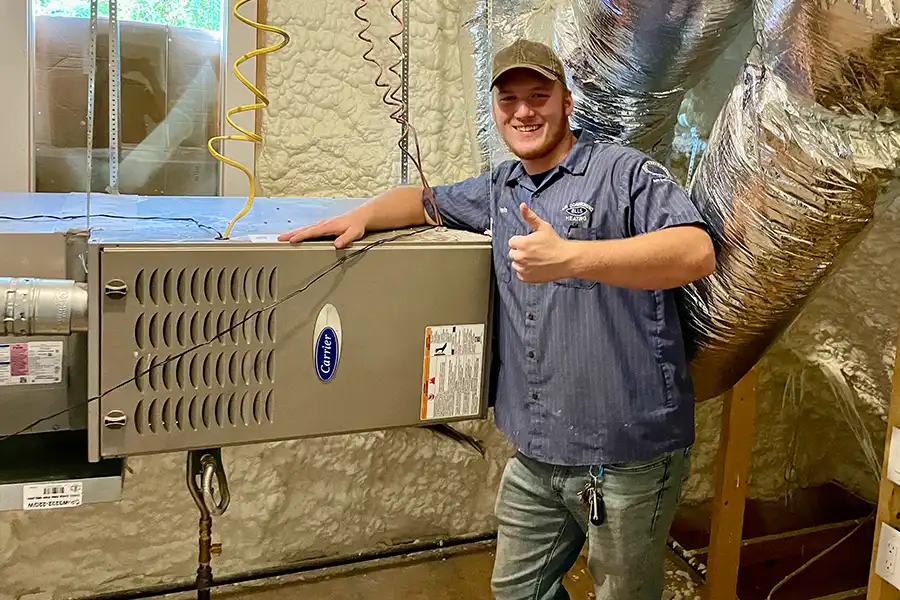
Our technician arrived and conducted a full zone system evaluation. He found that the upstairs damper actuator had failed in the closed position, blocking airflow to the second floor entirely. A secondary finding was that the bypass damper, which should have been routing excess system pressure back into the return when the upstairs zone closed, had seized in the partially open position and was bleeding a continuous portion of the system’s airflow back into the return even when both zones were calling for heat simultaneously, which was reducing the effective output to the downstairs zone as well. The technician replaced the failed actuator, freed and recalibrated the bypass damper, tested zone board communication across all thermostats and dampers, and verified correct airflow and temperature rise across both zones under individual and simultaneous calls before leaving. He also noted that the flex duct connection at the main upper-level supply trunk had developed a partial separation consistent with foundation settlement movement, and resealed it with mastic while he had the attic access open. Teresa said she had noticed the upstairs temperature problem developing gradually over the previous two winters but had assumed it was a characteristic of the floor plan rather than a mechanical issue. The technician’s explanation of exactly what had failed and why made the problem feel entirely solvable rather than chronic, which she said was a relief after two winters of assuming it was just how the house worked.
Why Midlothian Homeowners Choose Ellis AC & Furnace Repair
Midlothian’s growth has attracted a lot of new HVAC companies into Ellis County alongside the new residents, and not all of them bring the depth of regional experience that the area’s specific conditions require. Diagnosing furnace problems in a new subdivision built on active clay soil with open prairie exposure demands more contextual knowledge than a standard suburban service call, and homeowners who have dealt with companies that missed that context know the difference. Ellis AC & Furnace Repair brings 50 years of DFW regional experience to every service call, including the specific soil, climate, and construction conditions that define Midlothian’s residential environment. That is not something a company that arrived with the growth wave can replicate.
Midlothian homeowners who have worked with us describe the same consistent qualities as the reasons they call us back and refer us to their neighbors.
- Technicians who average more than 10 years with the company and bring the regional knowledge to understand how Ellis County’s Blackland Prairie clay, open terrain exposure, and rapid new construction cycle interact to produce the specific HVAC conditions found in Midlothian homes.
- A diagnostic process that does not treat a newer home as automatically problem-free, because in an active clay soil environment with open prairie wind exposure, even a five-year-old home can develop furnace system problems that require genuine diagnostic depth to identify accurately.
- Fully stocked service trucks that carry parts for the most common repairs across all furnace types and configurations, so the majority of jobs are completed on the first visit without ordering parts or scheduling a return trip.
- Written estimates with itemized breakdowns before any work begins, with no additions after the fact and no pressure to approve anything before the homeowner is ready.
- 24/7 emergency furnace repair availability for Midlothian homeowners when open prairie cold fronts arrive overnight and a heating failure cannot wait for a next-day appointment.
- A BBB A+ Rating, NATE certification, and TDLR licensing reflecting the professional standards we hold our entire team to on every call in every community we serve across the DFW region and Ellis County.
Fifty years of honest service in one region produces the kind of knowledge and reputation that cannot be built quickly, no matter how many trucks a company puts on the road. In a fast-growing community like Midlothian, that depth of experience is exactly what homeowners deserve when their furnace needs attention.