Contact Us
Lancaster is one of the oldest continuously settled communities in Dallas County, with a history that predates the city of Dallas itself. That deep local history is visible in the residential landscape: the city’s older core neighborhoods carry homes from the early and mid-twentieth century that have been lived in across multiple generations, while newer subdivisions developed through the 1980s, 1990s, and 2000s along the city’s expanding perimeter reflect the suburban growth wave that reshaped southern Dallas County over those decades. What connects those two very different housing populations is that both now carry mechanical systems that are aging into a range where problems begin to surface with increasing regularity, and both sit on some of the most expansive Blackland Prairie clay soil in the entire Dallas metropolitan area. Lancaster sits near the southern terminus of that clay formation, where the soil profile is deep, moisture-retentive, and among the most active in the region in terms of seasonal expansion and contraction.
Ellis AC & Furnace Repair has served the southern Dallas County area since 1975. We are family owned, and our technicians understand what the soil conditions, housing stock, and climate of Lancaster produce in terms of residential HVAC demands. When your furnace needs repair, we will give you a thorough diagnosis, an honest assessment, and a written proposal before any work begins.
our services
- AC & Furnace Air Filter Replacement
- AC Capacitor Replacement
- AC Coil Cleaning
- AC Compressor Repair
- AC Installation & Replacement
- AC Maintenance
- AC Repair
- AC Tune Up
- Dehumidifier Installation & Repair
- Ductless Mini Split Repair
- Emergency HVAC Repair
- Freon Recharge
- Furnace Installation & Replacement
- Furnace Maintenance
- Furnace Repair
- Heat Pump Installation & Replacement
- Heat Pump Maintenance
- Heat Pump Repair
- HVAC Ductwork Repair
- HVAC Inspection
- HVAC Maintenance
- HVAC Repair
- Indoor Air Quality Solutions
- Whole Home Air Purifier Installation
Why Homeowners in Lancaster, TX Trust Us
Furnace Warning Signs Lancaster Homeowners Should Take Seriously
Lancaster sits in the lower, flatter portion of southern Dallas County, and its position in that terrain means cold air that has traveled across the open prairie from the north and northwest arrives with relatively little buffering from topographic features. When a hard freeze settles in, it settles in fully, and a furnace that was managing adequately through a mild fall can find itself pushed past its limits within the first sustained cold stretch of the season. Catching a developing problem before that moment is always the better outcome. These are the signs that something is developing.
- The furnace runs through full cycles but the home holds several degrees below the thermostat setting, never reaching the temperature you set regardless of how long the system operates.
- The system engages briefly and then shuts off before completing a full heating cycle, restarting a short time later in a repetitive short-cycling pattern that never resolves the thermostat call.
- A sound that was not present last heating season has appeared, whether a deep crack at burner ignition, a persistent rattle during blower operation, or a low-frequency vibration that intensifies as the system reaches full output.
- Rooms along the exterior walls of the home, particularly those on the north and northwest sides, stay noticeably colder during cold weather than interior rooms despite the system running normally.
- Airflow from your supply registers feels weaker this season than it did last year, or the distribution across different rooms in the home feels uneven in a way that is new.
- Your heating bills are running higher this winter than during the same period in the prior year without any obvious change in how you use the system.
- The furnace does not respond at all when the thermostat calls for heat, or cycles through repeated ignition attempts without establishing a flame that holds through the startup sequence.
Lancaster homeowners who address these symptoms in the fall, before the first hard freeze arrives, consistently spend less time without heat and less money resolving the problem than those who wait until the system fails under peak demand conditions.
What Lancaster's Soil, History, and Housing Stock Do to Furnaces
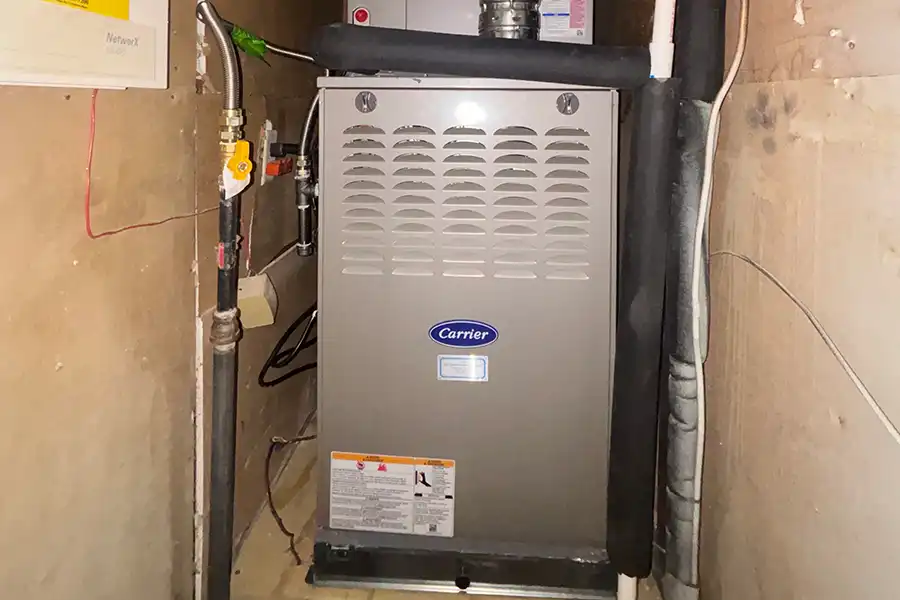
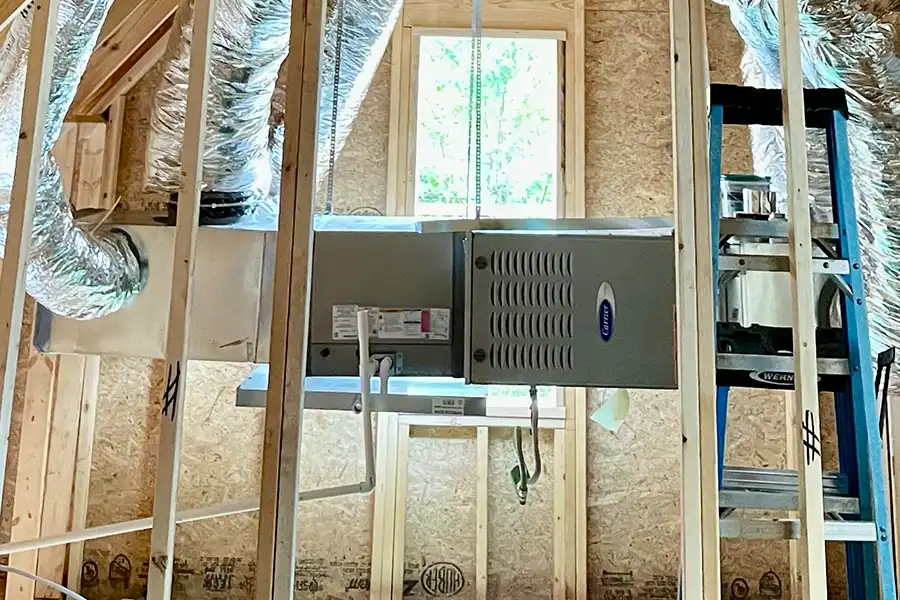
Lancaster occupies the southern edge of the Blackland Prairie formation in Dallas County, and the clay soil beneath the city is among the deepest and most moisture-active in the region. Unlike communities farther north in the county where the clay layer thins toward geological transitions, Lancaster’s soil profile extends to considerable depth and retains moisture from seasonal rain events far longer than shallower clay zones. That moisture retention keeps the expansion and contraction cycle running more aggressively and more persistently through dry periods than in communities situated on thinner clay overlying more permeable substrates. For homes built during Lancaster’s growth decades, the 1950s through the 1990s, that soil behavior has been working on foundation slabs, pier systems, and the ductwork connected to them for 30 to 70 years. The compounded effect on HVAC infrastructure is among the most pronounced our technicians encounter anywhere in the southern DFW corridor. These are the failure patterns that emerge from those conditions most consistently.
- Advanced duct joint separation in homes built during Lancaster’s postwar and mid-century growth periods, where original metal ductwork or early flex duct installations have been racked and displaced by decades of foundation movement on some of the most active clay soil in the county.
- Heat exchanger fatigue and stress fracturing in systems that have been running extended cycles to compensate for heat loss through aging building envelopes, with the extended runtime concentrating thermal stress at exchanger surfaces faster than the equipment was designed to sustain.
- Foundation pier movement complications in older Lancaster homes where the pier-and-beam construction common in mid-century properties has shifted enough to physically distort duct routing beneath the floor, creating crimps and separations that standard attic-based duct inspections do not reveal.
- Combustion venting deterioration in older systems where original flue configurations connected to masonry chimneys or early metal venting have corroded or separated over decades of seasonal temperature cycling in a climate that does not give equipment the winter dormancy that northern climates provide.
- Blower motor and capacitor failures driven by above-average annual operating hours in homes where both the heating and cooling seasons place sustained demands on the same motor assembly against the backdrop of a building envelope that was never designed to minimize those demands.
- Return air pathway restrictions in mid-century Lancaster homes where original duct design underestimated return requirements and where subsequent ownership cycles have introduced renovations that further reduced effective return air capacity without anyone evaluating the cumulative impact.
The combination of Lancaster’s deep clay soil, its older housing core, and its flat open exposure to winter weather produces a furnace repair environment that demands genuine familiarity with the specific conditions at play here, not a diagnostic approach calibrated for a generic suburban context.
How Ellis Approaches Furnace Repair in Lancaster Homes
Lancaster homes span a wider range of construction eras than most DFW communities, from early twentieth century properties in the historic core to 1990s subdivisions at the city’s perimeter, and our technicians approach each one with the awareness that the infrastructure conditions surrounding the equipment matter as much as the equipment itself. A furnace repair that addresses the component failure without accounting for the duct leakage, return air restriction, or combustion venting condition that is contributing to it produces a result that holds only until the next component fails under the same unaddressed circumstances.
Every service visit begins with a complete system inspection: heat exchanger condition and integrity, burner and ignition assembly, flame sensor, blower motor and capacitor, filter and return air pathway, flue and combustion venting, thermostat and control board, and accessible ductwork at the unit and nearby transitions. In older Lancaster homes with pier-and-beam construction, we also note any accessible under-floor duct routing that shows signs of distortion or separation. We measure static pressure and temperature rise under operating load before finalizing any findings, and we present everything in a written estimate before work begins. Our trucks carry parts for the most common repairs across all furnace types and configurations, and the majority of Lancaster service calls are completed on the first visit.

A January Call in Sagebrush Estates
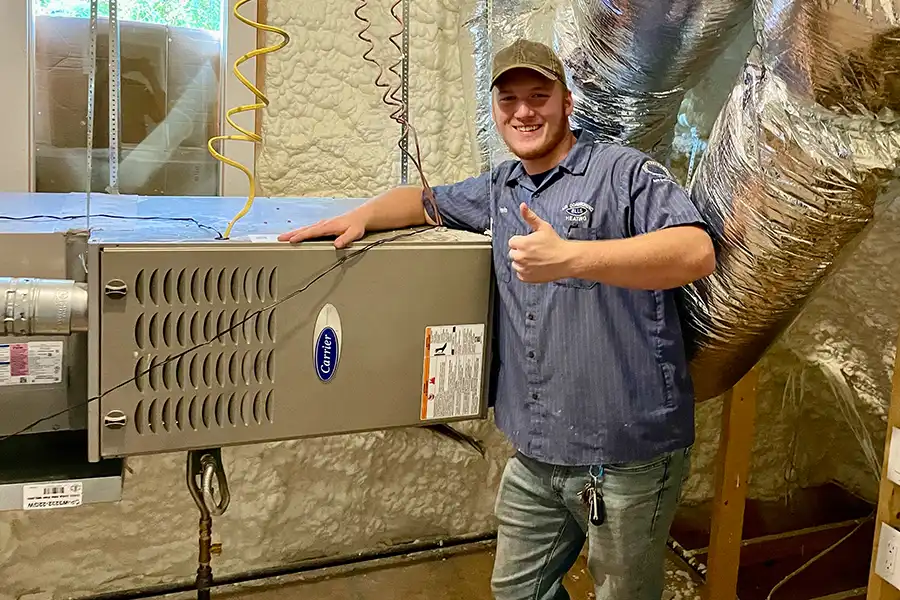
Sagebrush Estates is one of Lancaster’s established neighborhoods from the late 1980s, developed on the flat prairie terrain that characterizes this part of southern Dallas County. The homes there sit directly on the deep Blackland Prairie clay that defines Lancaster’s soil profile, and 35 years of seasonal expansion and contraction have left their mark on the duct systems in many of those properties in ways that are not visible until a technician gets into the attic and looks. On a bitterly cold Saturday morning in January, a homeowner named Yvonne called after her furnace had been running since before dawn without raising the temperature in her home above 58 degrees despite a thermostat set to 70.
Our technician arrived and conducted a full evaluation. In the attic, he found that the main supply trunk had separated completely at one transition fitting and partially at a second one, with both separations consistent with progressive joint displacement from foundation movement on Lancaster’s deep clay soil. Together, the two separations were routing the large majority of the system’s heated air output directly into the attic rather than into the living areas. A secondary finding was that the heat exchanger showed stress cracking at two points consistent with years of operating at elevated temperatures caused by restricted return airflow from an undersized return grille that had never been corrected since original construction. The technician resealed both trunk separations with mastic, documented the heat exchanger findings with photographs, and gave Yvonne a written estimate that clearly distinguished between what could be repaired now and what the heat exchanger condition meant for the system’s long-term outlook. He recommended she plan for full system replacement before the next heating season given the exchanger’s condition and the system’s age, but completed the duct repairs and got the home heating properly before leaving. Yvonne said no previous technician had ever identified the duct separations despite the system having underperformed for at least two winters, and that having the heat exchanger findings explained with photographs made the replacement recommendation feel like an honest assessment rather than an upsell.
Why Lancaster Homeowners Call Ellis AC & Furnace Repair
Lancaster is a community with a long memory and a strong sense of what honest service looks like. Homeowners here have watched this city grow and change across decades, and many of them have been in their homes long enough to have worked with a range of contractors across every trade. They know the difference between a company that is transparent and one that is not, and they talk to their neighbors. Ellis AC & Furnace Repair has been building its reputation in southern Dallas County communities since 1975 by operating on a simple standard: do the job right, explain it honestly, and charge fairly. That standard has not changed in 50 years, and it is what Lancaster homeowners can expect from every service call we run.
The qualities Lancaster homeowners consistently identify as most important when choosing a furnace repair company reflect the values we have held ourselves to throughout this company’s history.
- Technicians who average more than 10 years with the company and bring genuine familiarity with Lancaster’s deep clay soil conditions, its varied construction eras, and the specific HVAC failure patterns those conditions produce over time.
- A diagnostic process that evaluates the full system in its full context, including duct integrity, combustion venting condition, and return air capacity, because in a Lancaster home those infrastructure factors are frequently part of the reason a component failed in the first place.
- Fully stocked service trucks that allow the majority of repairs to be completed on the first visit, without ordering parts or scheduling a return trip that leaves the homeowner without heat any longer than necessary.
- Written estimates with itemized detail provided before any work begins, with no additions after the fact and no pressure to approve anything before the homeowner is ready to do so.
- 24/7 emergency furnace repair availability for Lancaster homeowners when a heating failure happens on a weekend, a holiday, or in the middle of the night during a hard freeze.
- A BBB A+ Rating, NATE certification, and TDLR licensing that reflect the professional standards we hold every technician to on every call, in every community we serve across southern Dallas County and the broader DFW region.
A company that has been doing this work honestly in one region for over 50 years has had to earn that tenure one service call at a time. In a community like Lancaster, where people know their neighbors and remember who showed up and did right by them, that kind of track record means something. We intend to keep adding to it.