Contact Us
Lancaster sits in the southern tier of Dallas County, where the Blackland Prairie stretches out flat and open with very little to moderate the summer heat that builds across this part of Texas from late May through September. It is a city with deep roots — incorporated in 1866, it is one of the oldest communities in Dallas County — and that history shows in the range of its housing stock, which spans from early twentieth century homes near the historic downtown square to postwar ranch properties, mid-century modest builds, and the residential subdivisions that expanded the city through the 1970s and 1980s. Each era of construction left a different HVAC footprint, and all of it is now running through North Texas summers that put aging systems to a genuine test.
Ellis Air Conditioning and Heating has been serving the DFW area since 1975, and our technicians understand the specific conditions that Lancaster’s geography, soil, and housing history create for residential cooling systems. When a Lancaster home needs AC repair, we arrive knowing what to look for and how to fix it.
our services
- AC & Furnace Air Filter Replacement
- AC Capacitor Replacement
- AC Coil Cleaning
- AC Compressor Repair
- AC Installation & Replacement
- AC Maintenance
- AC Repair
- AC Tune Up
- AC Vent Cleaning
- Dehumidifier Installation & Repair
- Ductless Mini Split Repair
- Emergency HVAC Repair
- Freon Recharge
- Furnace Installation & Replacement
- Furnace Maintenance
- Furnace Repair
- Heat Pump Installation & Replacement
- Heat Pump Maintenance
- Heat Pump Repair
- HVAC Ductwork Repair
- HVAC Inspection
- HVAC Maintenance
- HVAC Repair
- Indoor Air Quality Solutions
- Whole Home Air Purifier Installation
Why Homeowners in Lancaster, TX Trust Us
AC Repair Services Suited to Lancaster's Homes
Lancaster’s housing inventory reflects over a century of residential construction, but the bulk of its single-family stock falls in the postwar to 1980s range — brick ranch homes and modest two-story builds that have been running their cooling systems through southern Dallas County summers for decades. That profile creates a consistent and predictable set of repair needs that our technicians handle regularly throughout the city.
The repair services we provide to Lancaster homeowners include:
- Refrigerant leak detection and recharge to restore the cooling output that drops when slow charge loss develops through aging fittings, valve cores, and line sets in systems that have been through many years of thermal cycling in the southern Dallas County heat.
- Capacitor and contactor replacement on outdoor units that have accumulated the electrical wear that sustained operation under Lancaster’s open-terrain sun exposure produces over time.
- Blower motor and wheel service to recover the airflow that weakens in homes where aging motor components and long duct runs no longer deliver conditioned air effectively to every room in the floor plan.
- Evaporator and condenser coil cleaning and repair to address the efficiency loss that years of accumulated dust, Blackland Prairie windborne debris, and biological growth quietly produce on heat transfer surfaces.
- Condensate drain clearing and biological treatment to prevent the backups and water damage that become more likely as drain systems age in Lancaster’s humid late-spring and early summer conditions.
- Electrical and control board diagnostics to identify and correct the storm-related component damage that southern Dallas County’s spring severe weather season delivers to exposed outdoor equipment.
We verify full system performance before leaving every Lancaster job — temperature differential, airflow, and operating pressures all confirmed before we close out the call.
Signs Your Lancaster AC System Needs a Service Call
Lancaster’s flat terrain and southern Dallas County position means summer heat arrives early and stays late, with very little geographic buffer to moderate the conditions that push residential cooling systems to their limits. A system losing capacity here has less thermal cushion to absorb the shortfall than it would in a more moderate climate, which is why early recognition of warning signs carries particular value for Lancaster homeowners.
- The indoor temperature climbs above the thermostat setting during afternoon hours despite continuous system operation — in Lancaster’s open heat environment, this pattern almost always reflects a system condition rather than simply the outdoor temperature.
- Rooms at the far end of the floor plan stay several degrees warmer than those near the air handler regardless of thermostat position, a pattern in Lancaster’s ranch-style homes that typically traces to duct connections that have loosened over years of Blackland Prairie clay soil movement beneath the slab.
- The system short-cycles — turning on and off in rapid succession rather than completing full cooling runs — which reduces the system’s ability to manage indoor humidity and places repetitive stress on the compressor in aging equipment.
- A new mechanical sound surfaces during operation — a rattle from the outdoor cabinet, a grinding from the air handler, or a compressor that starts with noticeably more effort than the previous season.
- Water appears near the base of the indoor unit or stains a ceiling near a supply register, pointing to a condensate drain system that is no longer processing moisture effectively.
- Monthly energy costs from June through September run higher than the same period in prior years without any corresponding change in how the home is occupied or cooled.
In Lancaster’s summer climate, none of these signals improve on their own. Each one points to something the system needs, and acting while the problem is still developing is consistently less expensive than waiting for a complete failure.
Why Lancaster Homes Experience Distinct AC Wear Patterns
Lancaster sits squarely on the Blackland Prairie, and the deep, reactive clay soil that defines this geological zone is the single most consequential factor in the long-term HVAC performance of the city’s homes. This clay expands substantially when saturated during wet spring periods and contracts sharply under the dry heat of summer — a seasonal cycle that places continuous low-grade stress on the slab foundations beneath Lancaster’s predominantly single-story housing stock. Over the years, that foundation movement works duct connections progressively looser at joints and transitions, allowing conditioned air to escape into attic spaces rather than reaching the living areas it was meant to serve. In homes where this has been happening gradually for a decade or more, a system may be producing adequate output at the air handler while delivering a fraction of it to the rooms that need it.
Lancaster’s southern Dallas County position on flat, largely open terrain compounds the equipment stress. Outdoor condenser units here have minimal shade coverage and absorb direct solar radiation through the long cooling season with little relief. The city’s proximity to industrial and logistics development along Interstate 35E introduces ambient heat from surrounding commercial infrastructure that keeps temperatures in some corridors elevated beyond what open residential terrain would produce on its own. Spring severe weather crossing southern Dallas County brings hail and lightning exposure that affects outdoor equipment on open lots with less structural protection than denser suburban settings might provide.
A Recent Service Call Near Lancaster's Historic Square
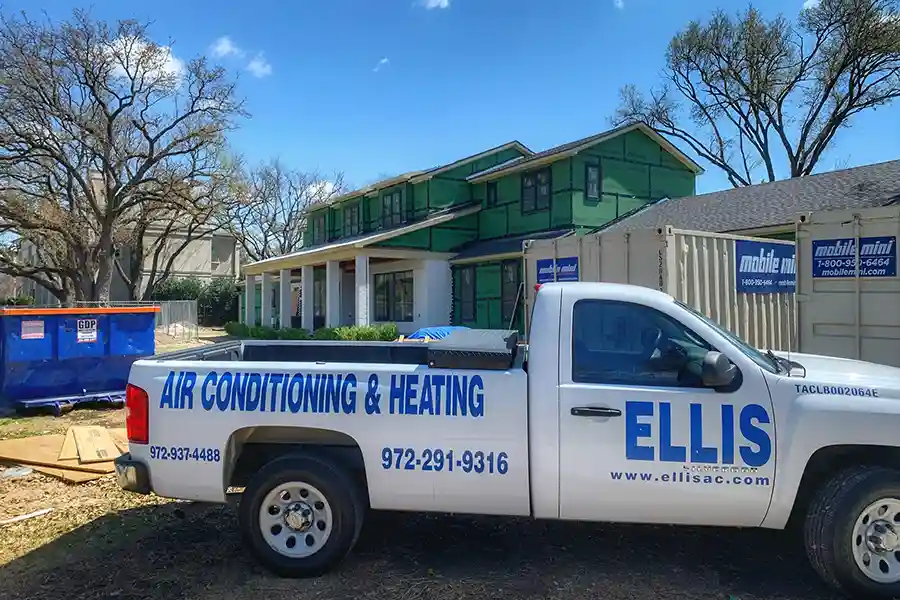
On a Tuesday afternoon in late July, we received a call from Marcus, a homeowner in an established neighborhood near the historic Lancaster square. His 1970s brick ranch had been struggling for most of the summer — the front rooms near the living area were reasonably comfortable, but the three bedrooms at the rear of the house had been climbing into the mid-80s by early afternoon every day for weeks. He had replaced the filter, lowered the thermostat repeatedly, and finally accepted that something beyond his ability to diagnose was wrong.
Our technician went to the attic and found the answer quickly. Two flex duct runs serving the rear bedrooms had separated from their connections at the main supply plenum — not violently, but gradually, the result of the slab movement that Lancaster’s Blackland Prairie clay produces beneath homes like this one over many years. Conditioned air that should have been reaching all three bedrooms had been exhausting directly into the attic for an indeterminate period. The front rooms near the air handler had been unaffected, which explained why Marcus had not connected the symptom to the duct system. Reconnecting and sealing both duct runs restored full airflow to the rear bedrooms within a single cooling cycle. The technician also noted moderate coil buildup and recommended a cleaning at the next scheduled maintenance visit.
Marcus had assumed the back rooms were simply harder to cool in an older home and had been managing with box fans for weeks. The technician explained that the Blackland Prairie clay movement beneath Lancaster’s slab foundations is one of the most common causes of duct separation in the city’s older housing stock, and that a periodic attic duct inspection — particularly for homes in his vintage and on his soil type — is one of the most practical maintenance investments a Lancaster homeowner can make.
Why Lancaster Homeowners Choose Ellis Air Conditioning and Heating
Lancaster is a community with a long history and residents who value straightforward, dependable service. Ellis Air Conditioning and Heating has been delivering that kind of service to DFW homeowners since 1975 — and every Lancaster homeowner who calls us gets the benefit of what more than five decades of honest HVAC work looks like in practice.
What Lancaster customers can expect when they call Ellis:
- Over 50 years of continuous North Texas service, with specific familiarity with Lancaster’s Blackland Prairie clay soil environment, open terrain heat exposure, and the housing stock that defines the city’s residential neighborhoods.
- A service team averaging more than 10 years of tenure with Ellis, delivering consistent expertise and accountability from professionals who have handled the full range of failure modes this climate and soil type produce.
- Active, verifiable credentials: Carrier Factory Authorized Dealer, NATE certification, BBB A+ Rating, and Texas TDLR license TACLB002064.
- Fully stocked service trucks prepared for the most common DFW repair scenarios, enabling us to complete most jobs in a single visit without leaving a household without cooling while waiting on parts.
- 24/7 emergency availability because a failed AC system in a Lancaster home on a summer afternoon is an urgent situation that cannot wait until the next business day.
- Free estimates and upfront pricing before any work begins — clear, honest communication at every stage with no surprises when the job is done.
We are a family-owned company, and every service call in Lancaster reflects the values that have guided us since 1975: integrity, dependability, and a genuine commitment to leaving every customer better off than we found them.