
AC Installation and Replacement in Lancaster, TX
- HONEST
- RELIABLE
- PROFESSIONAL
Contact Us
Lancaster is one of the oldest communities in Dallas County — incorporated in 1866 and carrying a residential history that stretches well before the postwar suburban expansion that defined most DFW cities. Its housing stock reflects that depth: original early 20th century homes near the historic downtown square, a dense layer of postwar construction from the 1940s through 1960s, a second wave of suburban development through the 1970s and 80s as the city’s population grew, and a more recent ring of newer subdivisions pushing toward the Ferris city limits in the south. Every decade of that history is represented in Lancaster’s neighborhoods today, and the HVAC systems across all of those eras are now somewhere on the arc between aging and overdue.
These are the signs Lancaster homeowners most consistently encounter before a system reaches the end of productive service life:
- The system runs continuously through peak afternoon hours in July and August without closing the gap between the indoor temperature and the thermostat setpoint — a failure that becomes more pronounced in older homes with minimal insulation where the heat load through walls and ceilings is substantially higher than in newer construction.
- You have needed refrigerant added more than once in two seasons, pointing to a recurring leak at a chronic stress point that will not resolve on its own and typically accelerates as the system ages further.
- The home feels persistently humid — heavy in the mornings after a full night of system operation — indicating a loss of dehumidification capacity that compounds discomfort throughout the summer.
- The system is 12 or more years old and has required at least one significant repair in recent seasons, a pattern that signals the remaining components are approaching the same threshold.
- Specific rooms — particularly those in older portions of the home, rooms above garages, or spaces added in later renovations — are consistently warmer than the rest of the house regardless of thermostat adjustments.
- Energy bills have climbed year over year without any change in usage habits, reflecting a system working harder for progressively less output as efficiency declines.
Whether your home sits near Lancaster’s historic downtown or in a newer subdivision along Pleasant Run Road, a free in-home estimate gives you the factual foundation to make a confident decision on your own timeline.
our services
Why Homeowners in Lancaster, TX Trust Us
The Conditions That Make Lancaster Uniquely Demanding on Cooling Equipment
Lancaster occupies the deep southern edge of Dallas County, where the landscape transitions from the densely developed suburban fabric of DeSoto and Duncanville to the more open prairie and agricultural land approaching Ellis County. That position — flat, open, and sitting squarely on some of the thickest and most reactive Blackland Prairie clay in the entire DFW region — creates a set of environmental conditions for residential HVAC equipment that are distinct from communities further north and meaningfully harsher than most homeowners realize.
These are the primary local factors driving AC wear and performance decline in Lancaster:
- Lancaster sits on what geologists recognize as among the deepest and most expansive Blackland Prairie clay deposits in Dallas County — soils that can expand vertically by three to five inches during wet seasons and contract by an equivalent amount during drought, creating foundation movement cycles far more dramatic than the clay movement experienced in the northern and central portions of the county. Over decades, that cycling gradually misaligns slab foundations, pulls refrigerant line sets out of plane, and stresses the brazed connections most vulnerable to slow leak development.
- Lancaster’s flat, open southern position offers minimal buffering from the intense summer heat that radiates across the open prairie between the city and Ellis County — without the urban tree canopy, elevated terrain, or commercial building density that moderate temperatures in more developed northern suburbs, outdoor condenser units in Lancaster neighborhoods operate against a higher effective ambient temperature during peak afternoon hours than official readings at Dallas stations would suggest.
- The city’s position along the I-35E corridor places Lancaster directly in the path of severe weather systems that track northeast from the Waxahachie and Ennis areas — a storm approach direction that brings some of the largest and most damaging hail in the DFW region, along with the power surges that accompany fast-moving fronts and regularly damage capacitors, control boards, and contactors in residential AC units throughout the city.
- Lancaster’s older housing stock — particularly the homes near the historic square and those built in the 1940s through 1960s — frequently features pier-and-beam construction rather than the slab foundations common in postwar suburban Dallas County, creating an entirely different set of challenges for duct routing, air handler placement, and equipment access that slab-era contractors are not always prepared to navigate.
- The open agricultural land that still borders much of Lancaster’s southern and eastern edges generates seasonal dust and particulate that moves freely across the city during dry periods, accelerating filter clogging and condenser coil contamination in homes without protective landscape buffers on their south and east exposures.
The combination of extreme Blackland Prairie clay movement, open prairie heat amplification, I-35E storm corridor exposure, pier-and-beam construction in older neighborhoods, and agricultural particulate from adjacent open land makes Lancaster one of the most demanding environments for residential cooling equipment in the southern DFW market.
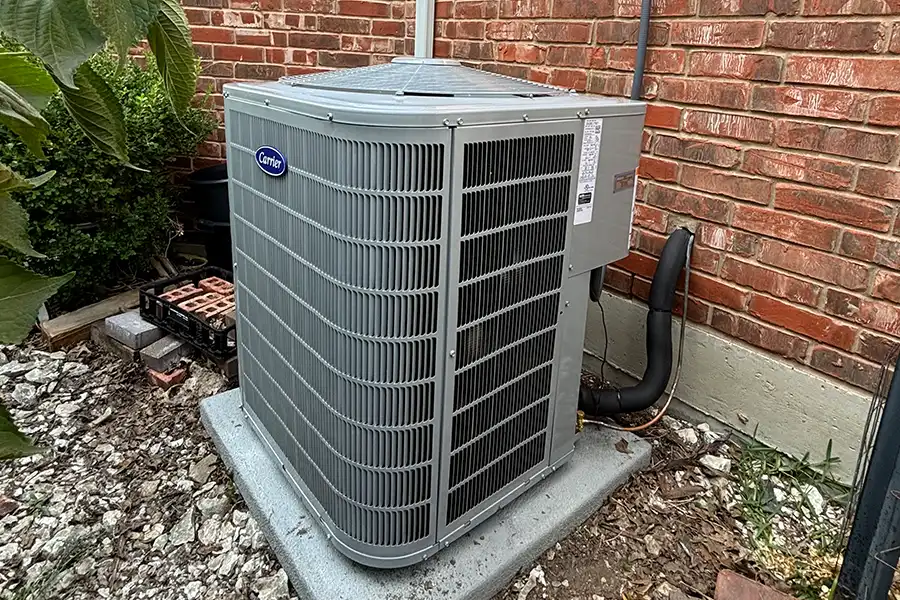
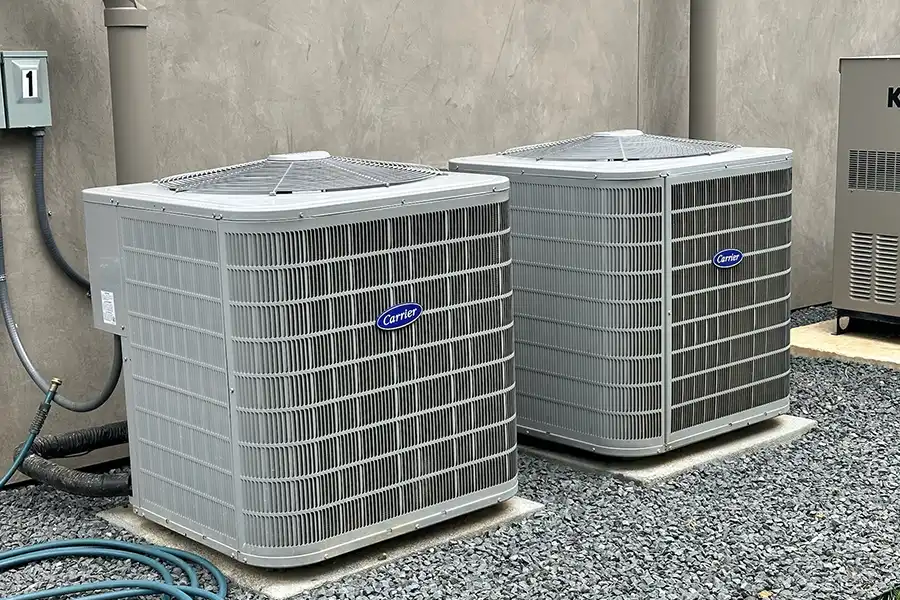
Our AC Installation and Replacement Services in Lancaster, TX
Ellis Air Conditioning and Heating has served communities throughout southern Dallas County and the broader DFW Metroplex for over 50 years. Lancaster’s combination of historic housing stock ranging from early 20th century pier-and-beam construction to 1990s slab-foundation subdivisions, some of the most reactive Blackland Prairie clay in the county, and an open southern position that intensifies both heat and storm exposure requires an installer who reads each home’s full context before specifying anything. Our process is built to do exactly that.
Our Lancaster AC installation and replacement services include the following:
- A complete in-home evaluation covering existing equipment condition, all accessible ductwork including configurations specific to pier-and-beam and early slab-era homes, attic insulation levels, foundation type and condition as it relates to refrigerant line routing and air handler placement, outdoor unit placement and airflow clearance, and any site-specific conditions such as open-land particulate exposure or clay soil movement history.
- A Manual J load calculation tailored to your home’s specific construction era, foundation type, insulation levels, and Lancaster’s local climate conditions — accounting for the open southern heat exposure and the dehumidification demands that the region’s clay soil moisture cycling creates.
- Full removal and EPA-compliant disposal of the existing system, including proper refrigerant recovery and recycling.
- Installation by NATE-certified, factory-trained technicians in fully stocked service vehicles experienced with both slab and pier-and-beam construction, with most replacements completed in a single visit.
- Ductwork inspection and repair or sealing as needed, with particular attention to the diverse duct configurations across Lancaster’s multi-era housing stock — from crawlspace runs in pier-and-beam homes to attic flex systems in 1970s and 80s slab construction.
- Full system commissioning with startup testing, refrigerant charge verification, airflow measurement at all registers, and a complete homeowner walkthrough before the job is considered finished.
Every estimate is free, every proposal is written and itemized, and no work begins until you have reviewed and approved the full scope and cost.
Inside a Typical Service Visit: A Lancaster Historic-Area Replacement
A few summers ago, we were called out to see Raymond, who owned a 1,650-square-foot home just a few blocks from Lancaster’s historic downtown square. The house was built in 1948 on a pier-and-beam foundation — one of the older homes in the neighborhood and one that had been carefully maintained through multiple generations of ownership. The replacement system, installed in 2006, had been repaired the previous summer for a failed contactor and was now struggling to keep the home below 80 degrees on afternoons above 95 degrees. A previous contractor had told Raymond the system was fine and recommended a new programmable thermostat.
Our technician’s inspection revealed a situation that is common in Lancaster’s older pier-and-beam homes and essentially invisible to contractors who primarily work slab construction. The 2006 system had been installed with the air handler in the interior closet — appropriate for the home’s construction — but the duct runs had been routed through the crawlspace beneath the pier-and-beam floor rather than through the attic, a configuration that was common in the era when the original duct system was first installed. Several of those crawlspace duct runs had deteriorated badly over the decades: the outer jacket had collapsed in two sections where standing water from a wet season had softened the fiberglass backing, and rodent activity in the crawlspace had compromised the insulation wrap on two additional runs, leaving bare flex duct exposed to the ground moisture and heat of the crawlspace environment. The system was conditioning air that was being partially absorbed into the crawlspace before it ever reached the living space.
We replaced the system with a correctly sized unit, re-ran all four compromised duct branches from the air handler closet through the attic rather than the crawlspace — permanently resolving the moisture and rodent exposure issue — sealed the attic penetrations, and balanced airflow at all registers. Raymond’s home reached and held his target temperature through the rest of that summer without the system running continuously. He told us he had been living with that level of discomfort for so many summers he had assumed it was simply what an old house felt like in July.
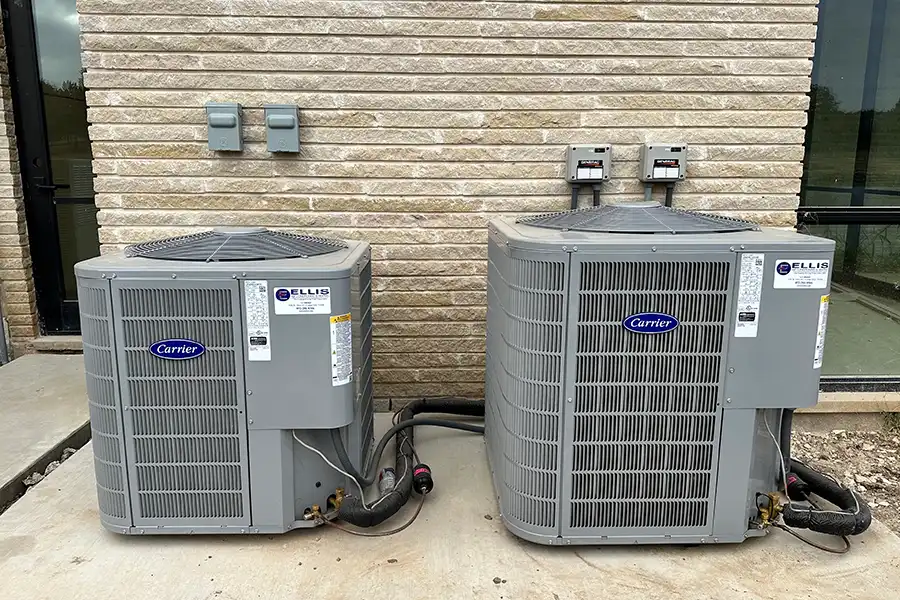

Why Lancaster Homeowners Choose Ellis Air Conditioning and Heating
Lancaster is a city with genuine history — one of the oldest communities in Dallas County — and the homes here carry that history in their foundations, their framing, and their mechanical systems. Serving those homes correctly requires a contractor who understands construction types and duct configurations that have largely disappeared from newer communities and who brings the experience to diagnose problems that contractors working exclusively in newer suburban housing simply do not encounter. Ellis Air Conditioning and Heating has been doing that work in southern Dallas County since 1975.
- More than 50 years of continuous service in the Dallas–Fort Worth area means our technicians have direct, hands-on familiarity with Lancaster’s full range of housing construction — from early 20th century pier-and-beam homes near the historic square to 1990s slab-foundation subdivisions near the city’s southern edge.
- Our technicians average over 10 years of tenure with Ellis, providing the experienced field judgment to correctly evaluate homes across Lancaster’s wide construction arc and the diverse duct configurations those different eras produced.
- As a Carrier Factory Authorized Dealer, Ellis meets rigorous manufacturer standards for training and installation quality that protect your equipment performance and preserve full warranty coverage from the first day of operation.
- We hold a BBB A+ Rating, NATE certification, and TDLR licensing under Texas License TACLB002064, independently verified credentials that reflect our professional standard on every job regardless of home age, foundation type, or construction complexity.
- Our large fleet of fully equipped service vehicles supports fast response across Lancaster and the surrounding southern Dallas County communities, with most installations completed without return trips for parts.
- We offer 24/7 emergency service, free in-home estimates, and written proposals with fully transparent pricing before any work begins.
History deserves expertise. In Lancaster, Ellis brings both.
AC Installation and Replacement in Lancaster, TX
Ellis Air Conditioning and Heating serves Lancaster, TX homeowners with AC installation and replacement services backed by more than 50 years of experience in the Dallas–Fort Worth area. Lancaster is one of the oldest cities in Dallas County, and its residential landscape reflects every decade of that history — from pier-and-beam homes built before central air conditioning existed as a standard residential technology, to postwar slab construction from the 1950s and 60s, to the tract home subdivisions of the 1970s and 80s, to the newer planned communities near the southern city limits. Each of those eras comes with its own foundation type, duct configuration, insulation level, and failure pattern — and the correct installation for a 1948 pier-and-beam home near the downtown square looks nothing like the correct installation for a 1985 slab home near Bear Creek Road.
What Lancaster homeowners across all of those eras share is some of the most reactive Blackland Prairie clay in Dallas County beneath their foundations, an open southern position that intensifies heat and storm exposure, and a set of aging mechanical systems that in many cases have never had the underlying infrastructure — ductwork, insulation, line set routing — formally evaluated against modern standards. We address that full picture on every job, because in Lancaster the infrastructure is as important as the equipment — and often more so.
Call today for a free in-home estimate. We will assess your home completely, explain your options clearly, and give you a written proposal with honest recommendations and transparent pricing.