Contact Us
Keller grew into one of the most sought-after communities in the DFW metroplex during the suburban expansion of the 1990s and 2000s, and the homes built here during that period reflect the ambitions of that era: larger footprints, more complex floor plans, higher ceilings, and in many cases zoned HVAC systems designed to manage the heating and cooling demands of a home that a single-system setup could not serve efficiently. That level of construction comes with a specific maintenance reality. Larger, more complex systems have more components that can wear, more control points that can fail, and more ductwork that needs to stay sealed and balanced to perform as designed. When something goes wrong in a Keller home, the diagnostic has to be thorough enough to account for that complexity.
Ellis AC & Furnace Repair has served the northern DFW corridor since 1975. We are family owned, and our technicians have the experience to work on the full range of residential furnace systems found in Keller, from the standard single-stage equipment in older sections of the city to the variable-speed, multi-zone systems installed in newer construction. When your furnace needs repair, we will find the actual problem, explain it clearly, and give you an honest proposal before we do anything.
our services
- AC & Furnace Air Filter Replacement
- AC Capacitor Replacement
- AC Coil Cleaning
- AC Compressor Repair
- AC Installation & Replacement
- AC Maintenance
- AC Repair
- AC Tune Up
- Dehumidifier Installation & Repair
- Ductless Mini Split Repair
- Emergency HVAC Repair
- Freon Recharge
- Furnace Installation & Replacement
- Furnace Maintenance
- Furnace Repair
- Heat Pump Installation & Replacement
- Heat Pump Maintenance
- Heat Pump Repair
- HVAC Ductwork Repair
- HVAC Inspection
- HVAC Maintenance
- HVAC Repair
- Indoor Air Quality Solutions
- Whole Home Air Purifier Installation
Why Homeowners in Keller, TX Trust Us
Furnace Symptoms That Deserve a Closer Look
In a larger Keller home, furnace problems can develop gradually and stay hidden longer than they would in a smaller, simpler floor plan. A failing component in one zone may not affect the rest of the home noticeably for weeks, and a slow decline in system efficiency often reads as a higher utility bill before it reads as a comfort problem. Knowing what to watch for gives you the best chance of catching an issue before it compounds into something more disruptive.
- One zone of your home stays consistently cooler than others during cold weather, even with the system running and the zone damper confirmed open.
- The furnace cycles on and off more frequently than it used to, running shorter intervals that never fully satisfy the thermostat call in any given zone.
- You notice a burning smell or a faint chemical odor during furnace operation that is not limited to the first few cycles of the season and does not clear with continued runtime.
- Airflow from certain registers has dropped noticeably compared to prior seasons, suggesting a duct, damper, or blower issue affecting distribution.
- The system produces a loud bang or boom when the burners ignite, which has either appeared recently or has grown louder over the past season.
- Your heating costs have increased meaningfully from one winter to the next despite no changes in thermostat programming or occupancy patterns.
- The furnace fails to respond to a zone call, or the control board displays a fault code that did not appear in prior seasons.
In a home with a zoned system, these symptoms can be easy to rationalize away as zone-specific quirks. Most of the time, they are not. A diagnostic visit from a technician who understands how zoned systems actually work is the most reliable way to find out what is happening.
What We See Most Often in Keller Furnace Systems
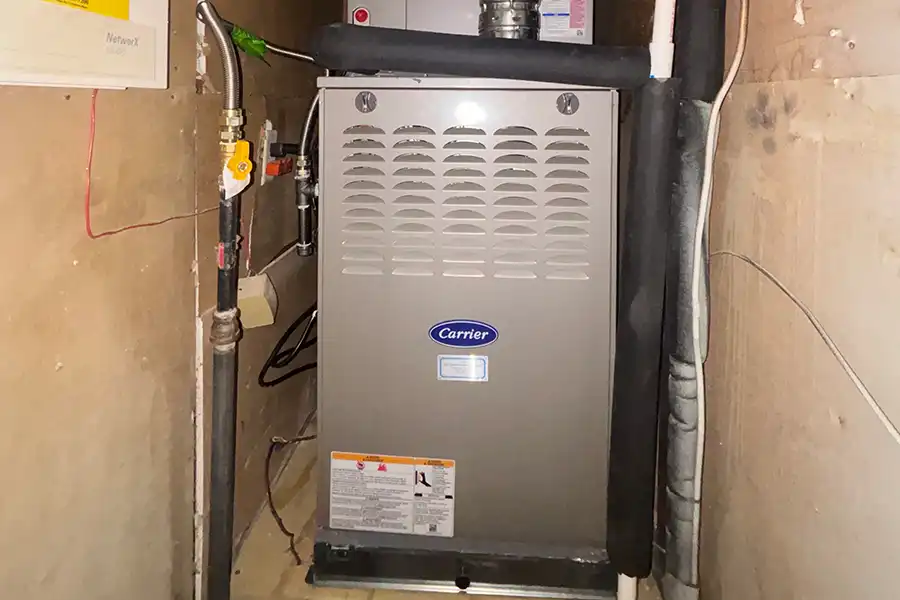
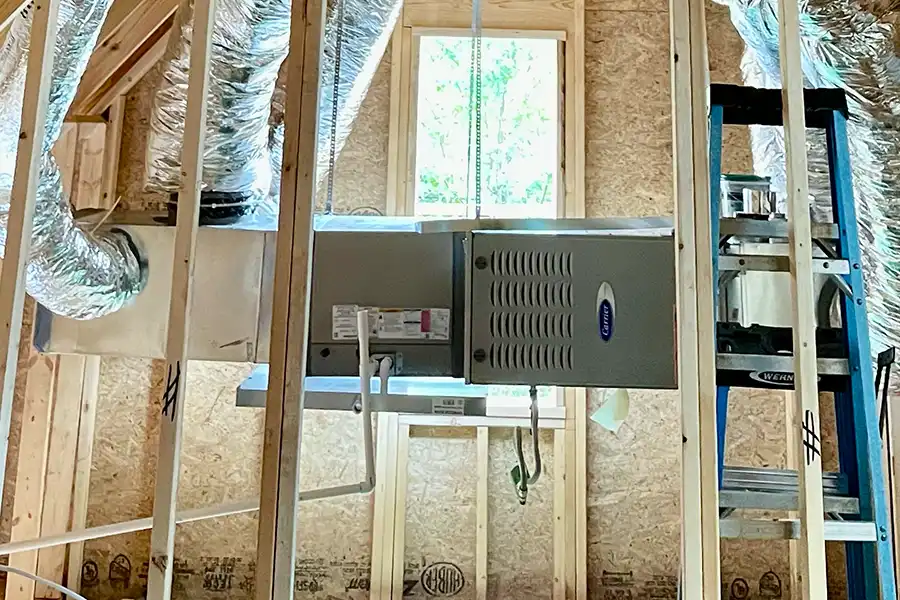
Keller sits on the eastern edge of the Cross Timbers geological zone, where sandy loam soils transition toward the heavier clay composition found further south and east in Tarrant County. That soil profile produces more stable foundation conditions than communities built on pure Blackland Prairie clay, which means ductwork in Keller homes is somewhat less vulnerable to the aggressive joint stress caused by foundation movement. What Keller homes do face, however, is the specific wear profile of systems installed during the late 1990s and 2000s building boom that are now 15 to 25 years into their service life, many of them carrying the full complexity of zoned configurations, variable-speed blowers, and two-stage gas valves that were more sophisticated than the average residential installation of that era. The failure patterns that emerge from that combination are consistent and recognizable.
- Zone control board failures and damper actuator wear in multi-zone systems where the original control components have been cycling continuously for two decades without replacement.
- Variable-speed blower motor faults in systems where the ECM motor technology from the early 2000s is now encountering age-related failures that require specific diagnostic knowledge to identify correctly.
- Heat exchanger fatigue in two-stage furnaces that have run through 15 or more years of North Texas temperature cycling, with stress fractures forming at weld points and transitions where thermal expansion concentrates.
- Bypass damper wear in zoned systems where the pressure relief path has been operating without maintenance for the life of the system and is now failing to open or close reliably.
- Gas valve and two-stage regulation issues in older high-efficiency systems where the second stage is no longer engaging correctly, causing the furnace to run in low-fire mode even during peak demand.
- Ductwork air leakage at trunk-to-flex transitions in attic installations where the thermal extremes of North Texas summers have degraded mastic and foil tape sealing over years of seasonal cycling.
These are not generic HVAC problems. They are the specific failure patterns of a specific generation of equipment installed in a specific type of home, and diagnosing them accurately requires a technician who understands all three of those dimensions.
How We Approach Furnace Repair in Complex Keller Homes
A zoned system or a variable-speed furnace is not harder to fix than a standard single-stage unit, but it does require a technician who understands how those systems are designed to operate before they can accurately identify where one has gone wrong. At Ellis AC & Furnace Repair, our technicians are factory trained and have the diagnostic experience to work on the full range of residential heating equipment, including the more sophisticated installations common in Keller’s higher-end neighborhoods.
Every furnace repair visit begins with a complete system evaluation. For standard systems, that means inspecting the heat exchanger, burner and ignition assembly, flame sensor, blower motor and capacitor, filter and return air pathway, flue venting, thermostat, and accessible ductwork. For zoned and variable-speed systems, we add zone board diagnostics, damper actuator testing, bypass damper evaluation, ECM motor testing, and two-stage operation verification. We measure static pressure, temperature rise, and airflow at the unit and at individual registers before writing up findings. You receive a written estimate with a clear breakdown before any work starts, and our trucks are stocked to handle the most common repairs on the first visit. We cover all furnace types and configurations, including zoned systems, dual-fuel setups, and high-efficiency variable-speed equipment.
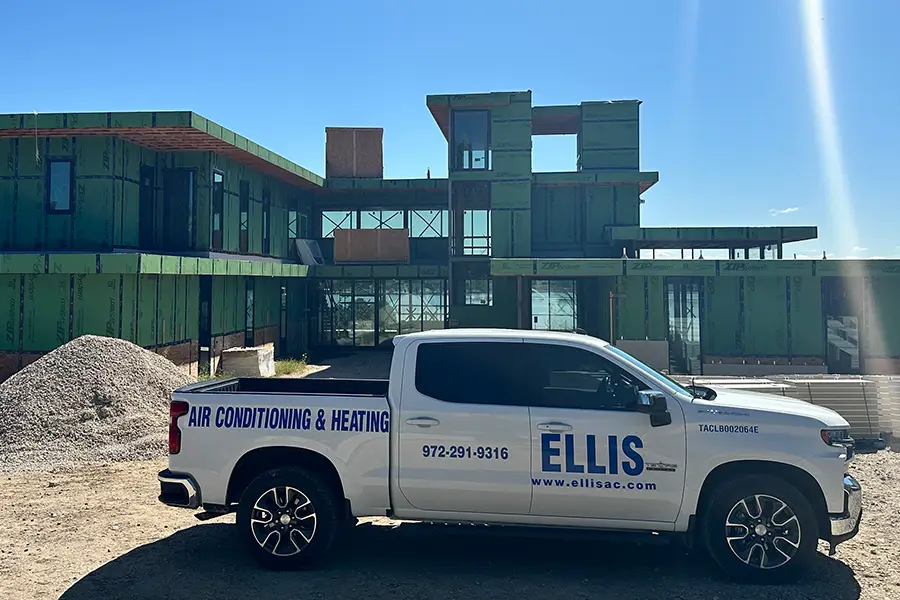
A Winter Call in Bloomfield Estates
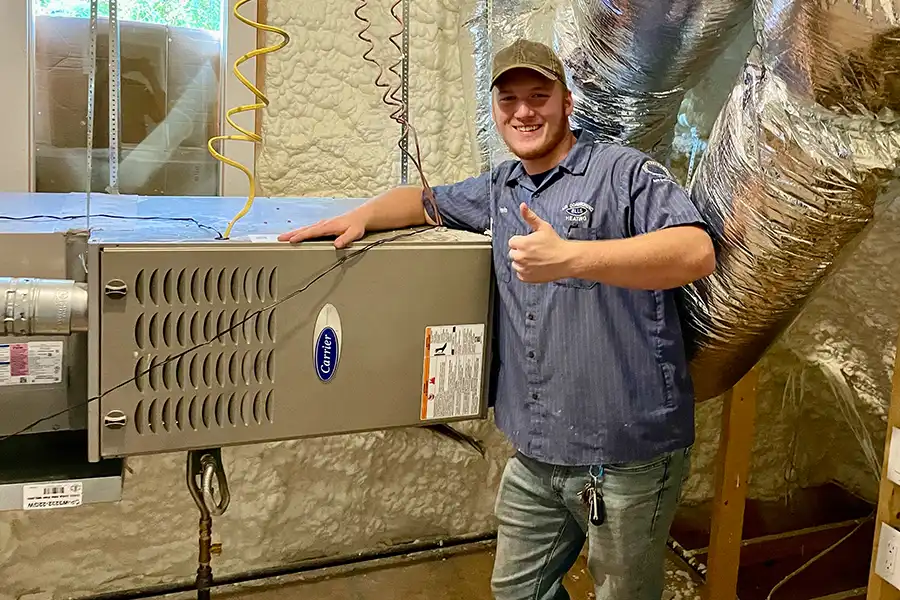
Bloomfield Estates is one of Keller’s established neighborhoods from the early 2000s, with larger homes on generous lots that were built with the kind of zoned HVAC configurations common in that era of DFW construction. The systems in those homes are now in their early-to-mid twenties, old enough that zone control components and variable-speed motors are starting to show their age in ways that can be difficult to diagnose without the right equipment and experience. Last January, a homeowner named Thomas called after one of his two heating zones stopped responding entirely while the other continued to operate normally.
Our technician arrived and ran a full zone system diagnostic. He found that the zone damper actuator serving the upstairs zone had failed in the closed position, blocking all airflow to the upper level. A secondary finding was that the bypass damper, which is designed to relieve pressure when multiple zones close simultaneously, had seized and was no longer opening reliably, which had been forcing the furnace to operate against elevated static pressure for an extended period. The technician replaced the failed actuator, freed and lubricated the bypass damper, retested the zone board communication across all dampers, and verified correct airflow and temperature rise in both zones before leaving. He walked Thomas through how the bypass damper works and why its condition matters for the long-term health of the furnace, which Thomas said he had never been told despite owning a zoned system for over 20 years. The system was fully operational within three hours of the initial call.
Why Keller Homeowners Trust Ellis With Their Heating Systems
Keller homeowners have invested significantly in their properties, and they expect the companies they hire to match that standard. A technician who is not familiar with zoned systems, variable-speed equipment, or the specific failure patterns of 2000s-era high-efficiency furnaces is not equipped to serve this community well, regardless of how responsive their dispatch system is or how polished their marketing looks. Experience and technical competence are the baseline, not the selling point.
At Ellis AC & Furnace Repair, both are well established. We have been working on the full range of residential HVAC systems in the northern DFW corridor for over 50 years, and our technicians bring the kind of specific, hands-on knowledge that comes from years of working on exactly the equipment found in Keller homes. That is what homeowners here consistently tell us they value most.
- Technicians who average more than 10 years with the company and are factory trained to work on zoned, variable-speed, and high-efficiency systems in addition to standard residential equipment.
- A diagnostic process thorough enough to catch the second and third contributing factors, not just the one that triggered the service call.
- Fully stocked service trucks that carry components for zoned system repairs, ECM motor diagnostics, and the most common furnace failures, so most jobs are completed on the first visit.
- Written estimates with itemized breakdowns before work begins, with no additions after the fact and no pressure to approve work on the spot.
- 24/7 emergency furnace repair availability for Keller homeowners whose heating system does not wait for business hours to fail.
- A BBB A+ Rating, NATE certification, and TDLR licensing that reflect the professional standards we hold our entire team to, not just the technicians who handle new installations.
Fifty years of honest work in one region earns a company a reputation it cannot fake and cannot buy. We have spent that time building exactly that, and we bring it to every service call in Keller.