Contact Us
Keller’s growth story is written in its neighborhoods. Through the 1990s and into the 2000s, the city transformed from a small north Tarrant County community into one of the most sought-after residential destinations in the entire Metroplex. That expansion produced a specific kind of housing inventory — predominantly large, two-story homes on generous lots with mature landscaping, multi-zone HVAC systems, and equipment that was installed during construction and has been running through North Texas summers ever since. For a significant share of those homes, that means systems are now 15 to 25 years old and entering the phase where repairs become more frequent and the question of repair versus replacement starts to carry real weight.
Ellis Air Conditioning and Heating has served the DFW area since 1975 and has been working in Keller throughout the city’s growth period. Our technicians understand the housing profile here — the larger floor plans, the multi-zone configurations, and the specific wear patterns that this climate produces in systems of this age. When a Keller home needs AC repair, we arrive knowing what to look for.
our services
- AC & Furnace Air Filter Replacement
- AC Capacitor Replacement
- AC Coil Cleaning
- AC Compressor Repair
- AC Installation & Replacement
- AC Maintenance
- AC Repair
- AC Tune Up
- Dehumidifier Installation & Repair
- Ductless Mini Split Repair
- Emergency HVAC Repair
- Freon Recharge
- Furnace Installation & Replacement
- Furnace Maintenance
- Furnace Repair
- Heat Pump Installation & Replacement
- Heat Pump Maintenance
- Heat Pump Repair
- HVAC Ductwork Repair
- HVAC Inspection
- HVAC Maintenance
- HVAC Repair
- Indoor Air Quality Solutions
- Whole Home Air Purifier Installation
Why Homeowners in Keller, TX Trust Us
Targeted AC Repair Services for Keller's Larger Homes
Servicing HVAC systems in Keller requires a different set of considerations than working in a city of compact, single-story homes. Larger floor plans mean more square footage to condition, longer duct runs delivering air to rooms on two floors, and multi-zone configurations where a problem in one zone can go undetected while the other zones appear to be functioning normally. Our technicians are trained for this complexity and bring it to every Keller job.
Our AC repair services for Keller homeowners include:
- Refrigerant system diagnostics and recharge to address the charge loss that develops over years of thermal cycling in systems serving large two-story homes that run extensively through long North Texas cooling seasons.
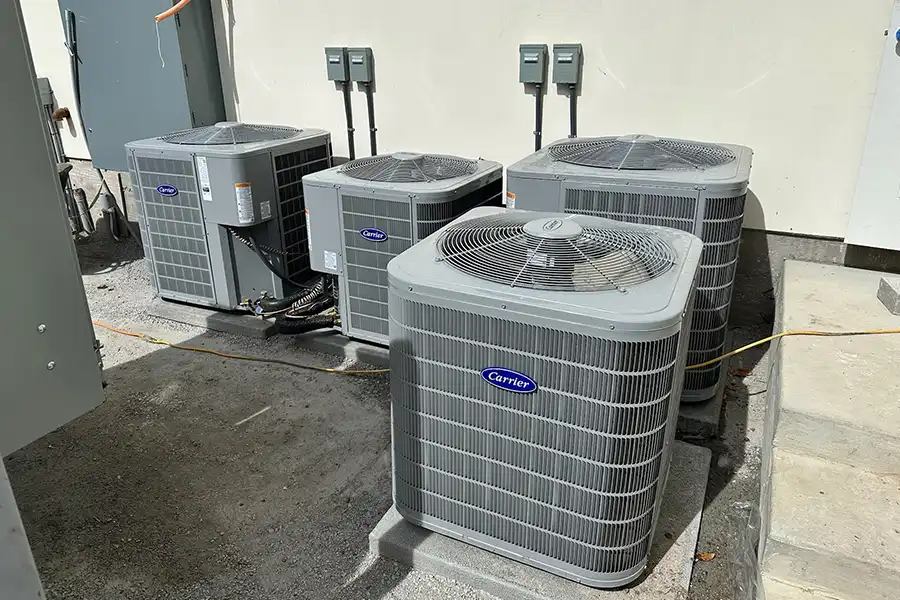
- Capacitor and contactor replacement on outdoor units that have operated through 15 or more DFW summers and are showing the electrical component wear that sustained heat exposure accelerates.
- Multi-zone system diagnostics to identify why one floor or one section of a larger Keller home is not receiving adequate conditioning while other zones appear to be operating normally.
- Blower motor and fan assembly service to restore the airflow that extended duct runs in Keller’s larger floor plans require to deliver conditioned air effectively to every room.
- Evaporator and condenser coil cleaning to recover efficiency that years of operation and Keller’s spring pollen and cottonwood season have eroded from heat transfer surfaces.
- Control board and electrical diagnostics to address the storm-related component damage that north Tarrant County’s active spring hail season delivers to exposed outdoor equipment.
We verify system performance across all zones before leaving any Keller job — confirming that both the equipment and the delivery network are operating at the level the home requires.
Recognizing When Your Keller AC System Needs Service
Keller’s larger homes can absorb a gradual performance decline more quietly than a smaller property would. When a system begins losing capacity in a 3,500 square foot two-story, the effects accumulate slowly enough that homeowners sometimes attribute the change to the heat rather than to the equipment. Knowing the early indicators helps catch problems while they are still manageable.
- The upper floor of a two-story Keller home becomes progressively harder to keep comfortable through July and August, even when the downstairs zone is performing normally — a pattern that typically points to an equipment or delivery issue specific to the upper zone.
- The system runs through noticeably longer cycles than it did in previous summers before the thermostat is satisfied, reflecting a capacity decline that extends beyond what outdoor temperatures alone would produce.
- A sound that was absent last season has appeared — a mechanical grind from one of the air handlers, a rattle inside the outdoor condenser cabinet, or a compressor that engages with more effort than it used to.
- Indoor humidity feels elevated despite continuous system operation, which in a multi-zone home often signals that one zone is short-cycling before completing its dehumidification pass.
- The monthly energy bill from peak summer months is measurably higher than the same period in previous years without any corresponding change in thermostat settings or occupancy.
- Ice forms on a refrigerant line or around an indoor coil — a counterintuitive symptom that indicates restricted airflow or a refrigerant charge that has dropped below operating range.
In a Keller summer, a system exhibiting any of these symptoms is unlikely to recover without professional attention. Addressing them before peak demand arrives is consistently the less expensive and less disruptive path.
What Drives AC Problems in Keller's Residential Communities
Keller’s HVAC challenges are largely a product of the city’s growth era. Homes built during the 1990s and 2000s suburban expansion were designed for comfort and curb appeal, with larger footprints and premium finishes — but the HVAC systems installed during that period are now old enough to be entering a phase of accelerated component wear. Capacitors, contactors, and motor bearings that were installed 20 years ago were not designed to run indefinitely, and the North Texas heat cycle — months of heavy operation followed by mild winters — does not give them much recovery time between seasons.
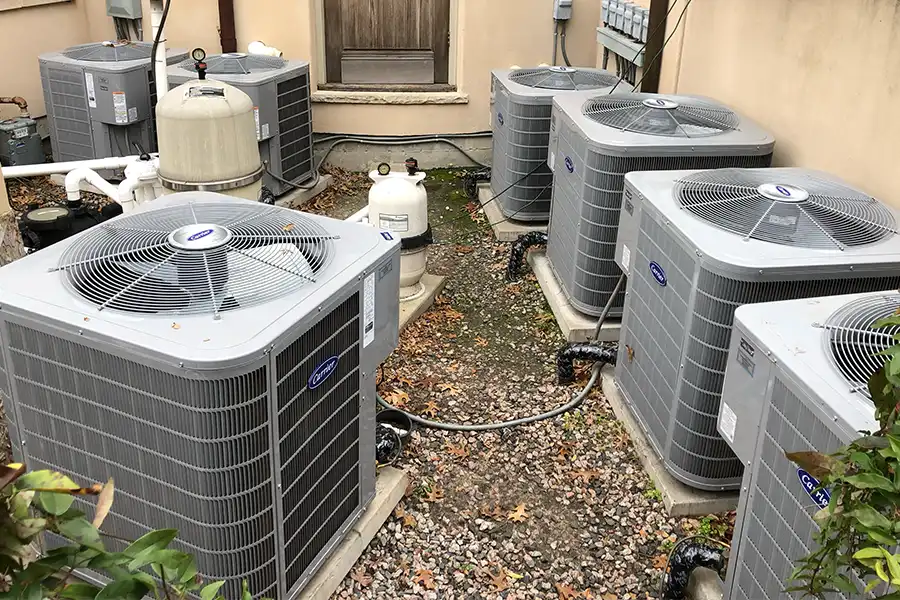
The multi-zone configurations common in Keller’s two-story homes add complexity that single-zone systems do not present. Zone dampers, control boards, and multiple air handlers create more potential failure points, and a problem in one part of the system can be masked by the other zones continuing to operate normally. Keller’s generous tree canopy, while providing welcome shade, deposits seasonal debris — cottonwood releases in spring, leaf fall in autumn — directly onto outdoor condenser units, contributing to restricted coil airflow that erodes efficiency over time. And north Tarrant County’s spring hail corridor delivers regular impacts to exposed outdoor equipment, damaging fin surfaces in ways that reduce heat rejection capacity without generating any immediate fault code.
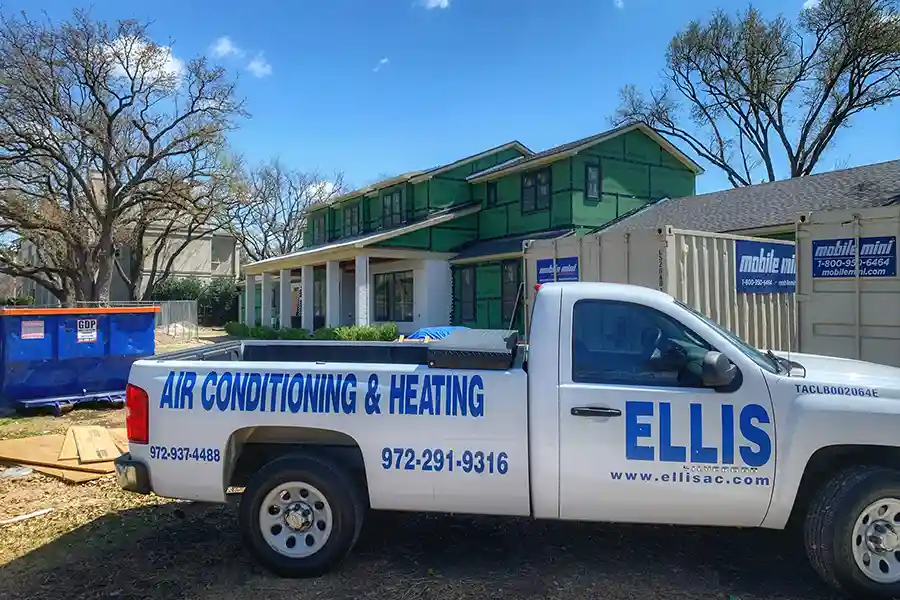
A Service Visit in Keller's Bloomfield Estates Neighborhood
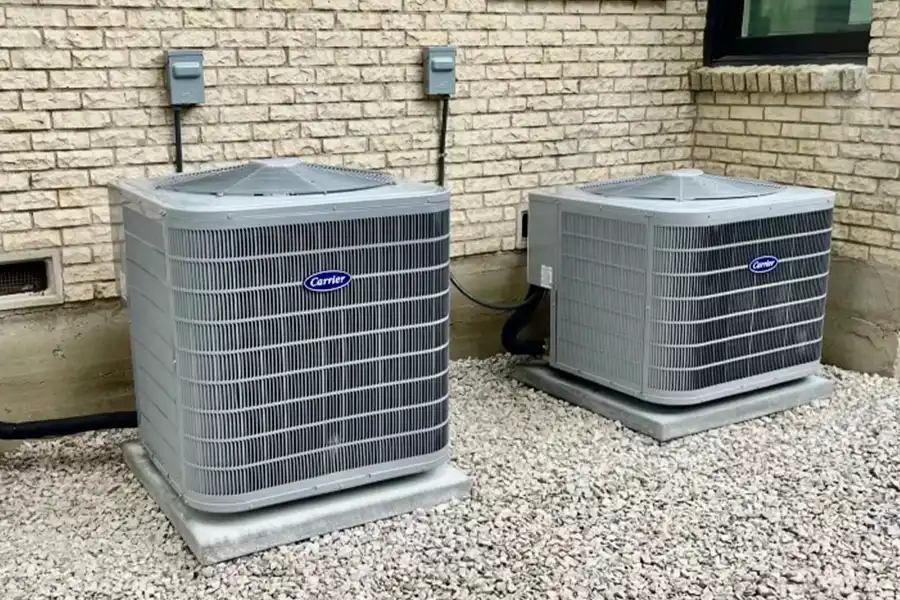
On a Monday morning in mid-August, we received a call from Deborah, a homeowner in the Bloomfield Estates area of Keller near Keller Parkway. Her two-story home had been cooling the downstairs comfortably all summer, but the upstairs had been running five to eight degrees above the thermostat setting since early July. She had adjusted the zone dampers, lowered the upstairs thermostat, and eventually accepted the situation as unavoidable in the August heat.
Our technician found the upstairs air handler’s blower capacitor had failed — not completely, but enough that the motor was running at reduced speed and moving significantly less air than the upstairs zone required. The system was still operating and the downstairs zone was unaffected, which is why the problem had gone undiagnosed for weeks. Replacing the capacitor restored the blower to full speed, and an airflow measurement confirmed the upstairs zone was now delivering the volume of conditioned air its floor plan required. The downstairs zone was also inspected and found to be in sound condition.
Deborah mentioned she had assumed the upstairs heat was simply a feature of two-story homes in Texas summers. The technician explained that while upper floors are always warmer, the gap she had been living with was well beyond what a properly functioning zone should produce — and that a spring tune-up including capacitor testing on both air handlers would have flagged the weakening component before it became a summer-long comfort issue for her family.
Why Keller Homeowners Choose Ellis Air Conditioning and Heating
Keller is a community where residents expect a high standard from the companies they invite into their homes, and Ellis Air Conditioning and Heating has been meeting that expectation across the DFW area since 1975. Every Keller homeowner who calls us gets the full benefit of what more than five decades of honest, skilled HVAC service looks like in practice.
What working with Ellis means for Keller customers:
- Over 50 years of continuous North Texas service, with specific experience working in Keller’s larger homes, multi-zone systems, and the climate conditions that define north Tarrant County.
- A service team averaging more than 10 years of tenure with Ellis, providing the consistent expertise and accountability that comes from seasoned professionals who know our standards and stand behind their work.
- Active, verifiable credentials: Carrier Factory Authorized Dealer, NATE certification, BBB A+ Rating, and Texas TDLR license TACLB002064.
- Fully stocked service trucks prepared for the most common DFW repair scenarios, enabling us to complete the majority of jobs in a single visit without leaving a household without cooling while waiting on parts.
- 24/7 emergency availability because a failed cooling system in a large Keller home on a summer afternoon is an urgent situation that cannot wait until the next business day.
- Free estimates and upfront pricing before any work begins — no surprises and no pressure at any stage of the process.
We are a family-owned company, and every service call in Keller is a reflection of the reputation we have spent more than five decades earning. We do not take that lightly.