Contact Us
Hurst is a mid-cities community that reached its full residential footprint decades ago, and the homes here carry that history in every detail. Most of the city was built out between the 1950s and the 1980s, producing a housing stock that is honest about its age: solid construction, modest square footage, and HVAC systems that have often been through one or two replacement cycles without the underlying infrastructure, ductwork, insulation, and air sealing ever receiving a comprehensive update. That combination creates a specific kind of challenge for furnace repair. The equipment may be relatively new, but the system it is connected to was designed for a different era, and the gap between the two is where most problems quietly develop.
Ellis AC & Furnace Repair has worked in Hurst and the surrounding mid-cities communities since 1975. We know this housing stock well, and we know what it asks of the heating systems installed inside it. When your furnace needs attention, you will get an honest diagnosis, a clear explanation, and a written proposal before anyone picks up a tool.
our services
- AC & Furnace Air Filter Replacement
- AC Capacitor Replacement
- AC Coil Cleaning
- AC Compressor Repair
- AC Installation & Replacement
- AC Maintenance
- AC Repair
- AC Tune Up
- Dehumidifier Installation & Repair
- Ductless Mini Split Repair
- Emergency HVAC Repair
- Freon Recharge
- Furnace Installation & Replacement
- Furnace Maintenance
- Furnace Repair
- Heat Pump Installation & Replacement
- Heat Pump Maintenance
- Heat Pump Repair
- HVAC Ductwork Repair
- HVAC Inspection
- HVAC Maintenance
- HVAC Repair
- Indoor Air Quality Solutions
- Whole Home Air Purifier Installation
Why Homeowners in Hurst, TX Trust Us
Warning Signs Your Furnace Is Working Against Itself
Hurst winters arrive the same way they do across the mid-cities corridor: mild for stretches, then sharp and sustained when a cold front pushes through from the north. A furnace that has been idle since spring is rarely ready for that demand without some wear showing through, particularly in a home where the underlying infrastructure has not kept pace with equipment updates. These are the signs worth acting on before conditions force the issue.
- The furnace runs through what sounds like a normal cycle, but the home never reaches the thermostat setting and feels only marginally warmer than when the system started.
- The system shuts off before completing a full heating cycle and restarts shortly after, repeating that short-cycle pattern throughout the day without ever satisfying the thermostat call.
- Rooms at the far end of the home or near exterior walls on the north side stay noticeably colder than rooms closer to the air handler, despite the system running continuously.
- You hear a sound at startup or during operation that was not present last season, including a sharp bang when the burners ignite, a rattling from the blower compartment, or a low hum that intensifies under load.
- The air coming from your registers feels weaker than it used to, or some registers deliver noticeably less airflow than others in the same system.
- Your heating bills have increased from one winter to the next without any corresponding change in thermostat settings, occupancy, or usage habits.
- The furnace fails to start at all when the thermostat calls for heat, or the ignition sequence attempts repeatedly without establishing a reliable flame.
In a Hurst home where the ductwork and building envelope may be decades old, these symptoms often reflect more than a single component failure. A thorough diagnostic is the only way to understand the full picture before committing to a repair approach.
Why Hurst Homes Produce Specific Furnace Problems
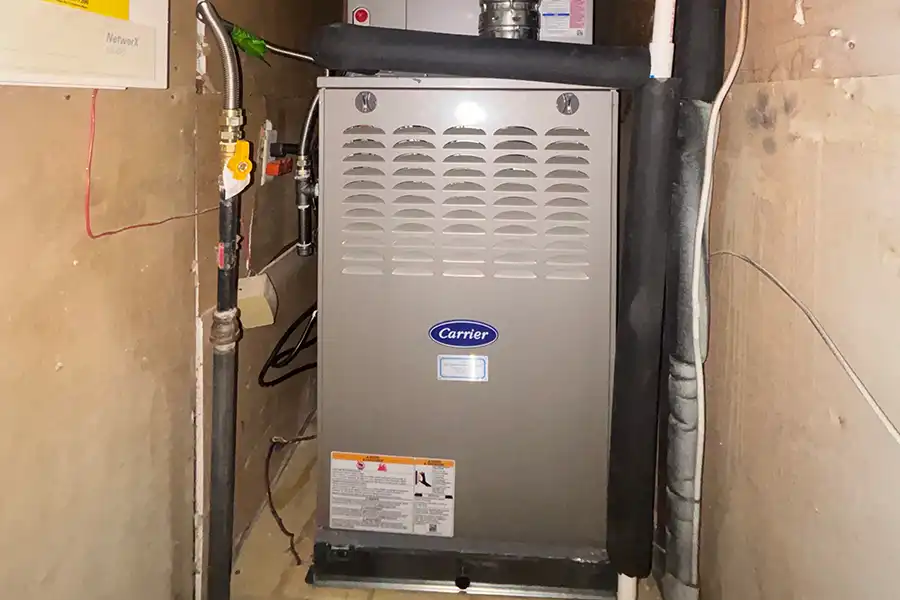
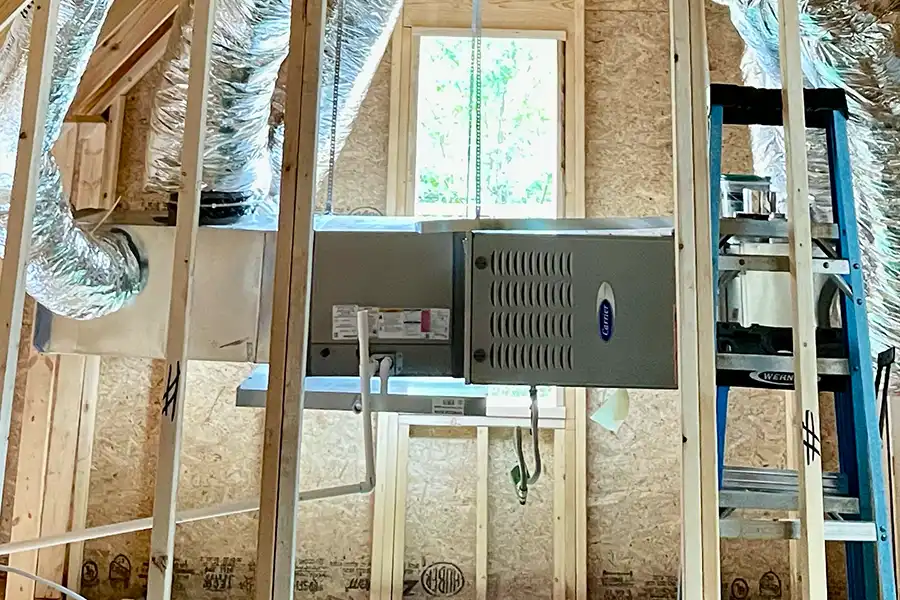
The bulk of Hurst’s residential development happened during an era when insulation requirements were minimal, duct design was imprecise, and building envelope performance was not a priority. Homes from the 1950s through the 1970s were built with attic insulation levels that would not pass inspection today, single-pane windows that bleed heat during cold snaps, and ductwork routed through unconditioned attic and crawl space areas without any meaningful thermal protection. The result is that even a properly functioning furnace in many Hurst homes is fighting against its own infrastructure, running longer cycles and working harder than the equipment was designed to sustain. Add in the sandy loam and clay mix of Tarrant County soils that causes gradual foundation movement, and the duct connections in older homes face ongoing physical stress on top of the thermal degradation already at work. The problems our technicians encounter most consistently in Hurst reflect all of those conditions.
- Oversized furnace equipment relative to the home’s actual heat loss, a common result of replacement decisions made without a proper load calculation, which causes short-cycling and premature component wear.
- Ductwork air leakage at joints and connections throughout the attic system, where original materials have degraded and foundation movement has stressed fittings that were never designed for long-term flexibility.
- Heat exchanger fatigue in systems that have been running extended cycles in homes with above-average heat loss, concentrating thermal stress on exchanger surfaces faster than in better-insulated properties.
- Blower motor and capacitor failures in systems that run more hours per season than their rated specifications account for, driven by the higher heating demand of an older, less-efficient building envelope.
- Return air restrictions in homes where original duct design provided inadequate return capacity and subsequent renovations further reduced it, starving the furnace of the airflow it needs to operate safely.
- Combustion venting problems in older systems where original flue configurations have corroded, separated, or been partially blocked, reducing draft and affecting combustion quality.
Understanding the relationship between a home’s age, its infrastructure, and its heating equipment is what separates a complete diagnostic from a parts-swap approach that leaves the underlying problem intact.
How Ellis Approaches Every Furnace Repair in Hurst
In a city where the gap between equipment age and infrastructure age is as wide as it often is in Hurst, a furnace repair that only addresses the component that failed is rarely the complete answer. Our technicians are trained to look at the system as a whole, because the conditions that caused one part to fail are usually still present and will continue affecting other components if they are not identified and addressed.
Every repair visit begins with a full system evaluation that covers the heat exchanger, burner and ignition assembly, flame sensor, blower motor and capacitor, filter and return air pathway, flue and combustion venting, thermostat and control board, and accessible ductwork at the unit and nearby transitions. We also assess static pressure and temperature rise under operating load, which gives us a clear picture of whether the system is performing within its designed parameters or working against infrastructure constraints that are shortening its service life. Everything we find is documented, explained in plain language, and presented in a written estimate before any work begins. Our trucks carry parts for the most common repairs, and most service calls in Hurst are resolved on the first visit. We work on gas furnaces, electric furnaces, and heat pump systems of all makes, ages, and configurations.
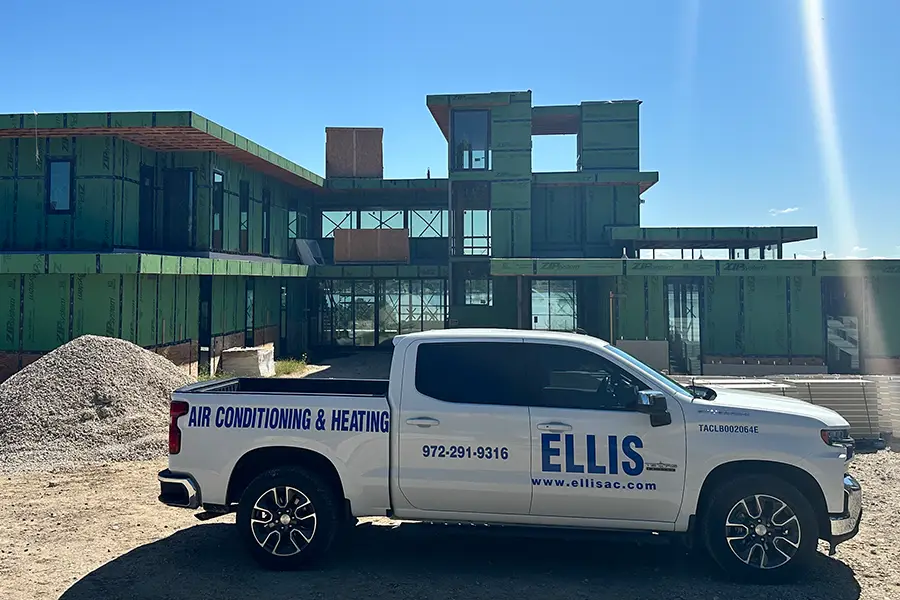
A February Call in Trailwood Estates
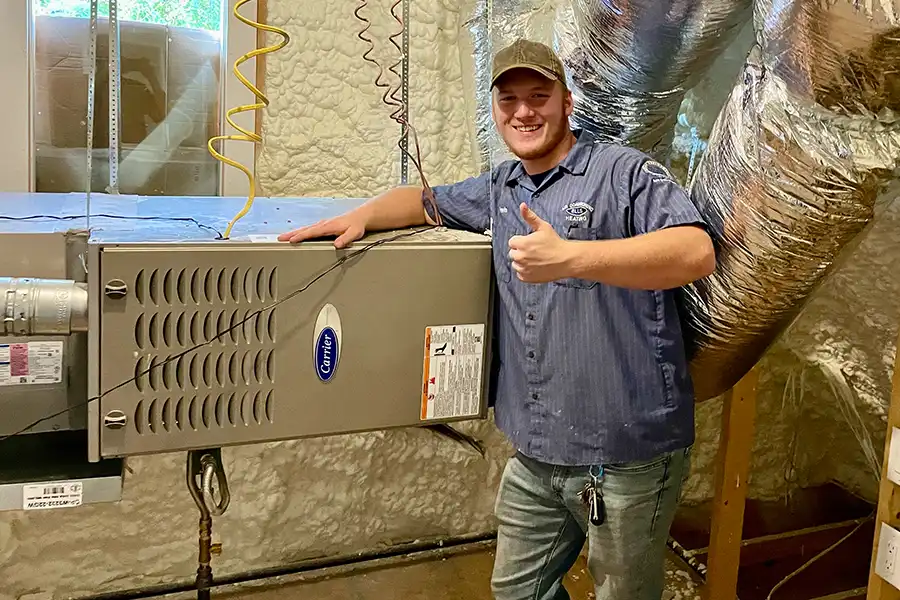
Trailwood Estates is one of Hurst’s established neighborhoods from the 1970s, with single-story homes on generous lots that have been well maintained over the decades but carry the infrastructure limitations common to that era of construction. The ductwork in many of those homes is original, the attic insulation is well below current standards, and the furnaces installed during renovation cycles in the late 1990s and early 2000s are now reaching the age where components begin to fail in clusters rather than one at a time. On a cold February afternoon, a homeowner named Nancy called after her furnace had stopped producing adequate heat over the course of several days, with the decline gradual enough that she initially assumed the weather was simply colder than usual.
Our technician arrived and conducted a complete system evaluation. He found three contributing issues operating simultaneously: a blower capacitor that had weakened to the point where the motor was running at reduced speed, a return air grille that had been partially blocked by furniture repositioned during a recent renovation, and a duct connection at the main supply plenum that had separated enough to route a meaningful portion of heated air into the attic. No single one of those problems would have explained the full degree of heat loss on its own. Together, they had been compounding quietly for weeks. The technician replaced the capacitor, documented the return air obstruction for Nancy to address, and resealed the plenum connection before retesting the system through multiple cycles. He also noted that the heat exchanger, while currently sound, was showing the surface oxidation pattern consistent with running extended cycles in an under-insulated home and suggested Nancy consider an attic insulation evaluation before the next heating season. Nancy said it was the most complete picture anyone had ever given her of how her home’s heating system actually worked, and she left the conversation knowing exactly what to prioritize and why.
What Hurst Homeowners Get When They Call Ellis
Hurst is a city full of homeowners who have been in their homes long enough to know the difference between a company that fixes the problem and a company that fixes the symptom. They have seen both, and they remember the distinction clearly. Ellis AC & Furnace Repair was built for that audience. We do not operate on volume, we do not rush diagnostics, and we do not recommend repairs that we would not stand behind six months later. That approach has sustained us as a family-owned company for over 50 years, and it is what homeowners in mid-cities communities like Hurst continue to choose us for.
The reasons Hurst homeowners call us and keep calling us are consistent across every neighborhood in the city.
- Technicians who average more than 10 years with the company and understand the specific infrastructure conditions found in mid-cities homes built across multiple decades of construction standards.
- A diagnostic process that evaluates the full system rather than stopping at the first component failure, because in an older home, isolated problems rarely stay isolated for long.
- Fully stocked service trucks that allow the large majority of repairs to be completed on the first visit, without ordering parts or scheduling a return trip.
- Written estimates with itemized breakdowns provided before any work begins, so the final invoice reflects exactly what was discussed and approved.
- 24/7 emergency furnace repair availability throughout Hurst and the surrounding mid-cities area for situations that cannot wait for a next-day appointment.
- A professional record that includes a BBB A+ Rating, NATE certification, and TDLR licensing, reflecting the standards we hold every technician to on every call.
Fifty years in one region means we have worked in homes like yours before. We know what they ask of their heating systems, and we know how to take care of both. That is not something a newer company or a national chain can offer, and it is the reason homeowners in Hurst continue to trust us with their most important home systems.