
AC Installation and Replacement in University Park, TX
- HONEST
- RELIABLE
- PROFESSIONAL
Contact Us
University Park is one of the most consistently well-maintained communities in the entire DFW Metroplex — a small, fully incorporated city surrounded by Dallas where homes are carefully kept and regularly updated. But meticulous upkeep at the surface level does not always translate to updated mechanical systems underneath, and University Park’s housing stock spans a wider age range than its manicured streetscapes suggest. From the original 1920s and 1930s brick colonials near SMU to the postwar homes filling in through the 1950s and 60s to the larger replacement structures built on teardown lots through the 1990s and 2000s, the HVAC systems inside University Park homes reflect that full range of eras. What they share is a community standard that expects them to work flawlessly — and a North Texas summer that tests that expectation every year.
These are the signs University Park homeowners recognize as a system approaches the end of its productive service life:
- The system runs continuously during peak afternoon hours without reaching the thermostat setpoint — a problem that becomes especially apparent in homes with significant historical square footage spread across multiple levels.
- Humidity inside the home has become a persistent issue, with the air feeling heavy or stale even on days when outdoor conditions are moderate, indicating the system has lost meaningful dehumidification capacity.
- You have had the same component repaired or replaced more than once in the past two to three seasons, which points to cumulative system fatigue rather than isolated component failure.
- The system is 12 or more years old — and in a home with the ceiling heights, window areas, and architectural complexity common in University Park, age compounds faster than in a simpler suburban structure.
- Rooms with significant south or west glass exposure — bay windows, sunrooms, or walls of glass common in renovated University Park homes — are consistently warmer than the rest of the house, suggesting the system was never properly sized for that solar load.
- A musty or stale odor accompanies system operation, pointing to microbial growth in the evaporator coil or ductwork — a condition that affects indoor air quality throughout a home and warrants immediate attention.
In a community where home values are among the highest in North Texas and the expectations for indoor comfort match, getting an honest evaluation of where your system stands is the right first step.
our services
Why Homeowners in University Park, TX Trust Us
What Makes University Park an Unusually Demanding Environment for HVAC Equipment
University Park’s 3.7 square miles are among the most intensively developed in all of Dallas County — a fully built-out enclave where every lot is occupied, the canopy is dense, and the homes range from modest postwar cottages to substantial new construction on teardown lots. That density and diversity create HVAC conditions that are distinct from both the urban core to its south and the sprawling suburbs to its north.
These are the specific local factors that drive AC wear and performance decline in University Park:
- University Park’s exceptional urban tree canopy — among the densest of any municipality in North Texas — provides meaningful shade to homes but creates a year-round debris environment for outdoor condenser units that is more demanding than most suburban settings. Live oak mast, Bradford pear blossoms, and cottonwood accumulate on coil fins across multiple seasons, and the dense root systems from those mature trees can gradually shift concrete equipment pads and stress refrigerant line sets running along exterior walls.
- The city’s older homes — particularly the 1920s through 1940s brick colonials near SMU and along Lovers Lane — were built with construction techniques and materials that create unusually high cooling loads per square foot. Solid brick construction holds daytime heat and releases it slowly into the evening, extending the effective cooling demand well past sunset in ways that newer insulated construction does not.
- University Park’s pattern of teardown and rebuild on existing lots has produced a city where a brand-new 5,000-square-foot home may sit directly beside a 1,400-square-foot postwar cottage on an identical lot — with wildly different HVAC requirements and sometimes shared or adjacent duct penetrations that complicate new installations.
- The city’s complete build-out and proximity to the North Central Expressway and Mockingbird Lane corridors contributes to a sustained urban heat island effect that elevates ambient temperatures around residential condensers above the readings at Love Field or other official stations — meaning systems are working against a higher baseline than regional weather data would suggest.
- Many University Park homes have been extensively renovated over the decades — adding square footage, enclosing patios, opening floor plans — without corresponding updates to ductwork or equipment sizing, leaving systems attempting to condition a home that has changed substantially since the system was specified.
University Park’s combination of historic brick construction, teardown-era new builds, dense canopy debris, urban heat island elevation, and renovation-altered floor plans makes it one of the more technically demanding service environments in the Dallas area.
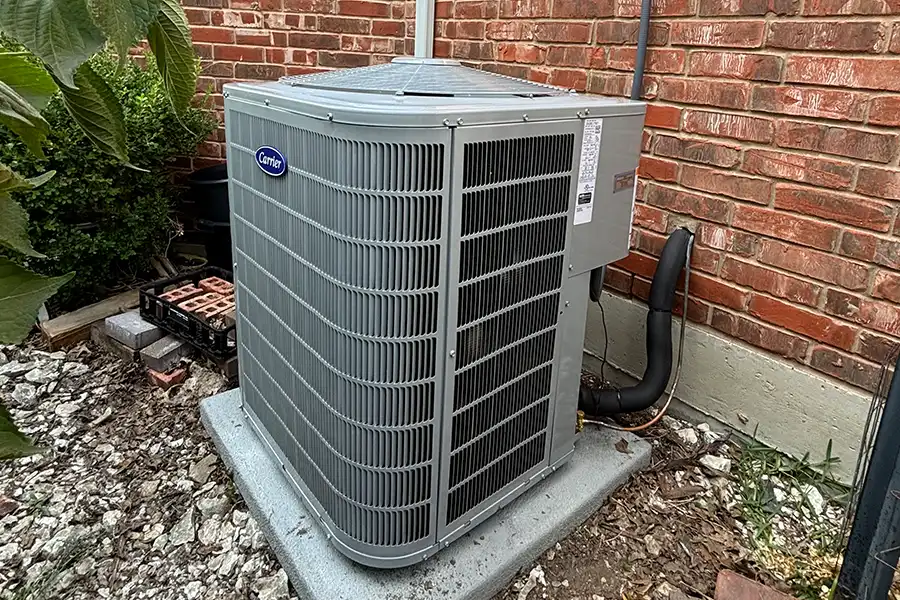
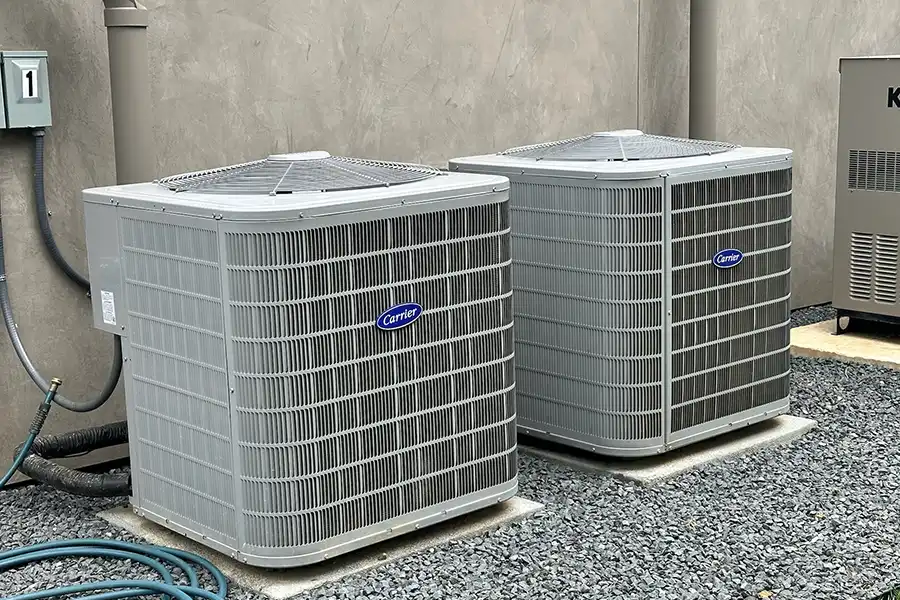
Our AC Installation and Replacement Services in University Park, TX
Ellis Air Conditioning and Heating has served the Dallas area and the broader DFW Metroplex for over 50 years. University Park’s combination of historic homes, new construction on infill lots, extensively renovated mid-century structures, and the community standards that apply to all of them requires an installer who evaluates each home on its own terms rather than applying a template. That is how we have approached every job since 1975.
Our University Park AC installation and replacement services include the following:
- A complete in-home evaluation covering existing equipment condition, all accessible ductwork, attic and crawlspace configuration, the current conditioned square footage including any additions or renovations, solar load from significant glass areas, and any access or clearance constraints specific to the home’s age or construction type.
- A Manual J load calculation that accounts for University Park’s urban heat island conditions, solid brick construction thermal mass in older homes, your home’s current floor plan as renovated rather than as originally built, and specific solar exposure from south and west-facing glass.
- Full removal and EPA-compliant disposal of the existing system, including proper refrigerant recovery and recycling.
- Installation by NATE-certified, factory-trained technicians in fully stocked service vehicles, with most replacements completed in a single visit subject to access and configuration specific to the home.
- Ductwork inspection and repair or sealing as needed, with particular attention to renovation-era modifications that may have altered original duct routing or introduced air bypasses between conditioned and unconditioned spaces.
- Full system commissioning with startup testing, refrigerant charge verification, airflow measurement at all registers, and a complete homeowner walkthrough before the job is considered finished.
Every estimate is free, every proposal is written and itemized, and no work begins until you have reviewed and approved the full scope and cost.
Inside a Typical Service Visit: A University Park Brick Colonial Replacement
Last spring, we were called out to see Catherine, who owned a 2,600-square-foot brick colonial on a shaded lot just off Lovers Lane in University Park. The home was built in 1938 and had been in her family for decades, beautifully maintained and tastefully updated — new kitchen, refinished hardwoods, renovated bathrooms — but the HVAC system, a replacement installed in 2004, had never quite kept pace with summer demands on the second floor. She had accepted it as a quirk of an old house. A technician the previous fall had told her the system was fine and recommended she keep it going as long as possible.
When our technician arrived, the evaluation revealed a situation that is common in University Park’s older brick homes. The 2004 system had been sized using standard square footage calculations that did not account for the thermal mass of the home’s solid brick exterior walls. Brick absorbs heat through the day and releases it slowly through the evening and into the night, maintaining a higher effective indoor load than an insulated wood-frame home of the same size would produce. The system had been marginally undersized from installation and had been working at or beyond capacity on every hot afternoon for 19 years. The second-floor ductwork ran through an unvented knee wall space that had never been insulated, further reducing effective delivery to the upper bedrooms.
We replaced the system with a correctly sized unit that accounted for the brick thermal mass load, insulated the knee wall duct runs, and sealed the connections throughout the second-floor distribution. Catherine’s second floor reached consistent comfort levels through the summer for the first time she could remember. She noted that she had always assumed the upstairs heat was simply the cost of living in an old home — and was struck by how much of it had been a correctable installation problem all along.
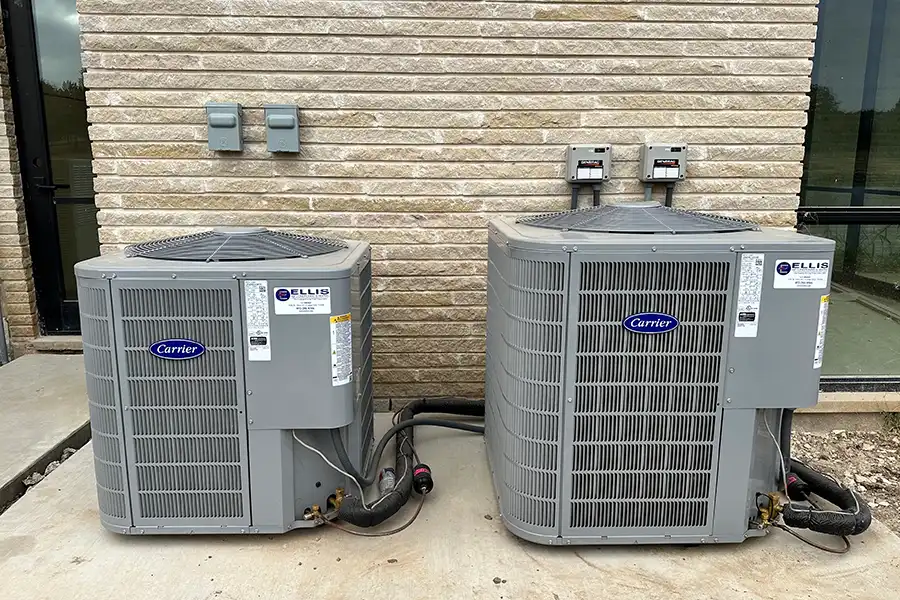
Why University Park Homeowners Choose Ellis Air Conditioning and Heating
University Park is a community where the homes are significant, the standards are high, and the contractors who work here need to bring genuine competence — not just availability. The combination of historic construction, extensively renovated interiors, new infill builds, and a community that expects everything to work correctly creates an environment where experience and thoroughness matter more than they do in a straightforward suburban replacement. Ellis Air Conditioning and Heating has been delivering that level of work in the DFW area since 1975.
- More than 50 years of continuous service in the Dallas–Fort Worth area means our technicians have direct, hands-on experience with the historic construction types, renovation patterns, and urban conditions specific to University Park and Dallas’s Park Cities corridor.
- Our technicians average over 10 years of tenure with Ellis, providing the experienced judgment needed to correctly evaluate a home that has been altered, added to, and updated across multiple decades of ownership.
- As a Carrier Factory Authorized Dealer, Ellis meets rigorous manufacturer standards for training and installation quality that protect your equipment performance and preserve full warranty coverage from the first day of operation.
- We hold a BBB A+ Rating, NATE certification, and TDLR licensing under Texas License TACLB002064, independently verified credentials that reflect our professional standard on every job regardless of home age, size, or complexity.
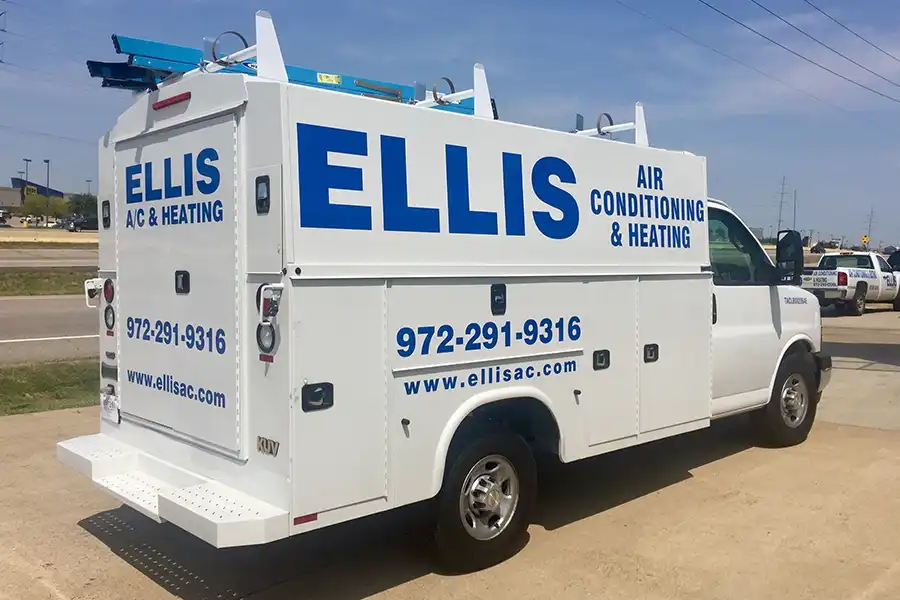
- Our large fleet of fully equipped service vehicles supports fast response throughout University Park and the surrounding Park Cities area, with most installations completed without return trips for parts.
- We provide 24/7 emergency service, free in-home estimates, and written proposals with fully transparent pricing before any work begins.
A home in University Park deserves a contractor who understands what makes it different — and who brings the experience to handle that difference correctly.
AC Installation and Replacement in University Park, TX
Ellis Air Conditioning and Heating serves University Park, TX homeowners with AC installation and replacement services backed by more than 50 years of experience in the Dallas–Fort Worth area. University Park presents a set of installation challenges that few other DFW communities replicate — the thermal mass of 1930s and 40s solid brick construction, the altered floor plans of extensively renovated mid-century homes, the wildly different cooling demands of new infill construction beside original cottages on identical lots, and a community expectation of comfort and reliability that leaves little margin for an undersized or improperly installed system.
Every one of those factors influences what a correctly specified system looks like for a given home — and none of them show up in a square footage estimate. Our technicians evaluate University Park homes as the complex, layered structures they are: accounting for brick thermal mass, renovation-altered duct routing, solar load from south and west glass, and the current conditioned footprint rather than the original one. That evaluation is what separates a system that performs correctly from one that repeats the same cycle of summer complaints the previous unit created.
Call today for a free in-home estimate. We will assess your home completely, explain your options plainly, and give you a written proposal with pricing you can count on.